Is Sustainable Accreditation Required for Your Office Fit-Out? - DENTON
The pros and cons of environmental accreditations
Sustainability, environment, and wellbeing are three huge factors impacting office fit-out decisions and have become a priority within many industries to support ESG initiatives as they try to reach net zero by 2050. But with a range of environmental accreditations on offer, you may be wondering which is best for you and how you can still make a difference if the accreditations seem out of reach.
In this article, we explore a few different available accreditations, the differences between each and discuss what alternatives exist for those who can’t adopt a certified environmental strategy due to time, resource, or cost.
For further advice from our expert interior design team, take a look at our recent paper discussing how we can meet the challenge of the climate crisis by shaping a sustainable workplace.
Contents:
1. What environmental accreditations are available?
2. 2025 Updates: Changes to accreditations
3. Benefits of environmental accreditation
4. Alternative to environmental accreditations
5. DENTON, supporting your sustainability objectives
DENTON
What environmental accreditations are available?
There are many available accreditations when exploring a sustainable fit-out, and choosing the right one for your project might seem impossible. Fortunately, at DENTON, we have the expertise to suggest the best accreditation for your project. Below is a quick explanation of some of the available accreditations we employ for our design & build projects.
- BREEAM – “The world’s leading science-based suite of validation and certification systems for a new sustainable built environment.”
- LEED – “LEED provides a framework for healthy, efficient, carbon and cost-saving green buildings. LEED certification is a globally recognised symbol of sustainability achievement.”
- SKA – “SKA rating is an environmental assessment method, benchmark and standard for non-domestic fit-outs, led and owned by RICS”
- WELL – “Everyone deserves to live their best, healthiest life. WELL marks your commitment to people-first places.
Benefits of environmental accreditation
While there are merits to all accreditation schemes, it is important to know there are some key differences. For example, BREEAM, LEED and WELL apply to all phases of the build and cover new builds and refurbishments, whereas a SKA rating is project driven and only covers refurbishments. Another key difference is that BREEAM, LEED and SKA are sustainability led, while WELL is wellbeing led. And finally, BREEAM, SKA and WELL have licensed assessors who examine the evidence against the criteria, but with LEED, the design team collects the evidence and submits it.
With such key differences, it’s important to look at the benefits of each accreditation and find the one which aligns best with your project and what you want your certification to show.
2025 Updates: Recent Changes to Key Environmental Accreditations
As sustainability efforts continue to accelerate, major environmental accreditations have undergone significant updates to better support the industry’s transition towards a more sustainable future. Here are the latest changes to two of the most prominent sustainability certifications for fit-out projects:
SKA Rating: Enhanced Independence and Expanded Reach
In 2024, SKA Rating transitioned from being managed by the Royal Institution of Chartered Surveyors (RICS) to becoming an independent, not-for-profit organisation. This move aims to strengthen its commitment to promoting sustainable fit-out practices. With this shift, SKA Rating is now positioned to enhance its focus on driving sustainability within the fit-out sector, allowing for a broader impact and the adoption of more sustainable practices across a wider range of projects.
Despite this transition, SKA Rating continues to offer its certification services through accredited assessors. In addition, it maintains its valuable free online tool, which businesses can use to assess their sustainability performance. This tool provides a useful resource for organisations, even for those not pursuing full certification, making sustainability assessment more accessible.
The new independent structure also sets the stage for SKA Rating to expand its reach, fostering growth in sustainable fit-out practices across the industry.
BREEAM V7: A Holistic Approach
Meanwhile, BREEAM has also made significant strides in sustainability with the launch of its latest version, BREEAM V7, in 2024. A major focus of this updated version is tracking a building’s pathway to net-zero carbon, with particular emphasis on both embodied and operational carbon emissions.
BREEAM V7 introduces a more holistic, performance-based approach to sustainability, moving away from a focus on specific processes in favor of overall building performance. This shift encourages a more integrated, results-oriented strategy for sustainable construction and refurbishment. In addition to the focus on net-zero carbon, BREEAM V7 continues to highlight other key aspects such as the reduction of embodied carbon, improvements in occupant health and well-being, and the promotion of biodiversity net gain.
These updates represent an important evolution in sustainability assessment, aligning with the growing demand for buildings that not only minimise environmental impact but also contribute positively to the well-being of their occupants and the surrounding environment.
Disclaimer: This information is based on publicly available sources and is subject to change. For the most up-to-date information, please refer to the official websites of SKA Rating and BREEAM.
Alternative to environmental accreditations
As we have mentioned, not everyone has the time, cost, or resources to adopt a certified environmental strategy such as a SKA rating or BREEAM. In these circumstances, it doesn’t mean you can’t still adopt the design principles and create a sustainable environment that brings a lot of the same benefits.
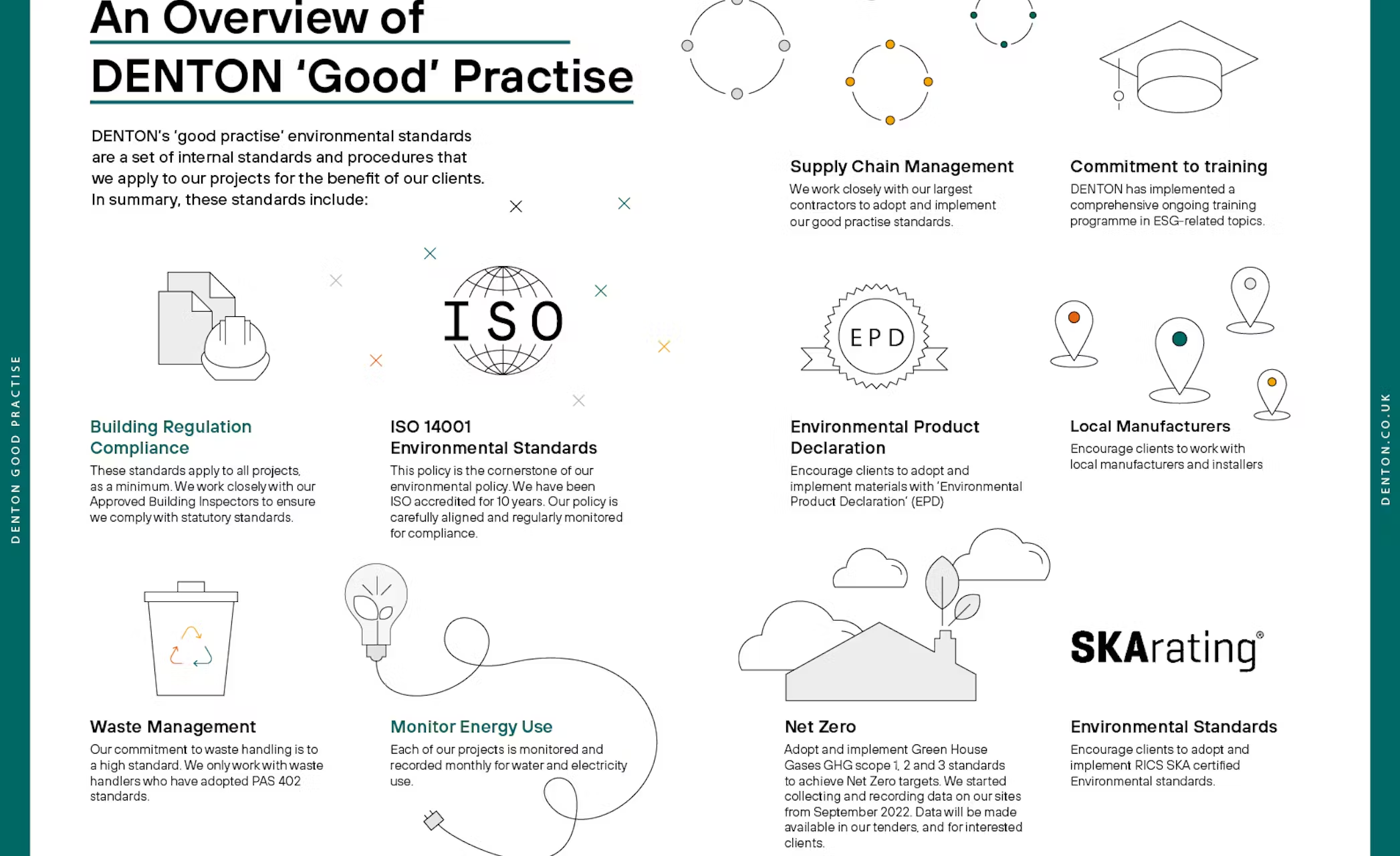
DENTON’s ‘good’ practise environmental standards are a set of internal standards and procedures that we apply to our projects for the benefit of our clients. As it isn’t a full accreditation, the cost, time, and resources needed are less, meaning it is more achievable.
Each of these standards is monitored and reported on throughout a design & build project and helps to ensure each project is as sustainable as possible. The key principles of DENTON ‘good’ practice are:
- Building regulation compliance
- ISO 14001 environmental standards
- Waste management
- Monitor energy usage
- Supply chain management
- Commitment to training
- Environmental product declaration
- Local manufacturers
- Net zero
DENTON
Start a project with DENTON
With a range of office locations across the country from London to Manchester and more, we can help provide you with a sustainable office fit-out project, whether you have the resource available for accreditation or not. With DENTON’s ‘good’ practice standards, we have you covered either way.
Our leading design and build experts work collaboratively with you to understand what you want to achieve from your space and what your company culture is like to present solutions which work best for you and your staff. Drop our friendly, experienced team a line today and let’s start a project together.
Richard has been Board Director of DENTON since 1998. In addition to his board responsibilities, Richard has executive responsibility for DENTON’s Marketing and Sustainability services.
Richard is a Chartered Surveyor and holds degrees in Building Surveying, Construction Management and Interior Architecture. He is a highly regarded visiting lecturer at the University of Hertfordshire.
Have a project in mind?
- Experience
- Creativity
- Integrity
- Experience
- Creativity
- Integrity
- Experience
- Creativity
- Integrity
- Experience
- Creativity
- Integrity
- Experience
- Creativity
- Integrity
- Experience
- Creativity
- Integrity
- Experience
- Creativity
- Integrity
- Experience
- Creativity
- Integrity
- Experience
- Creativity
- Integrity
- Experience
- Creativity
- Integrity