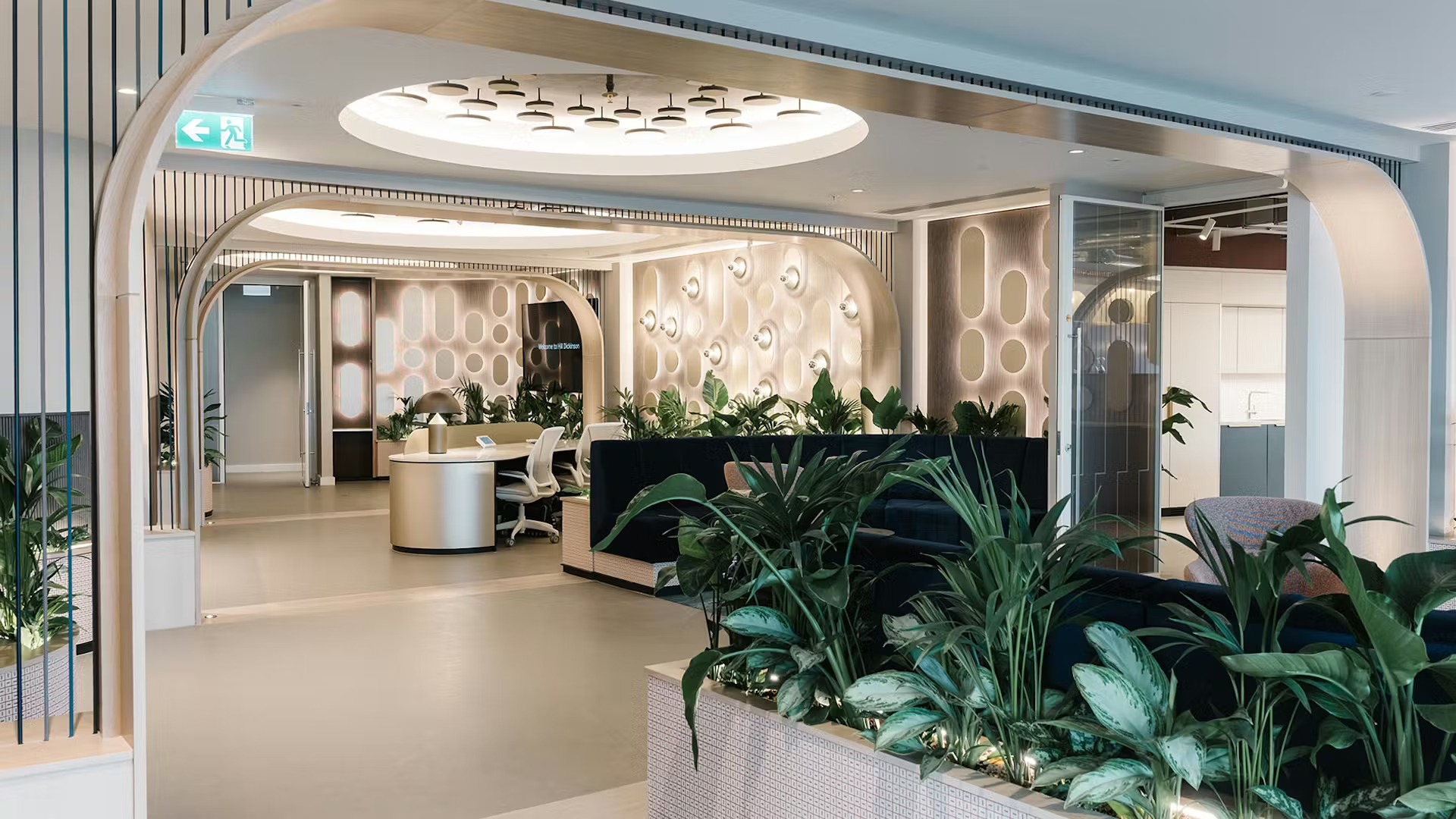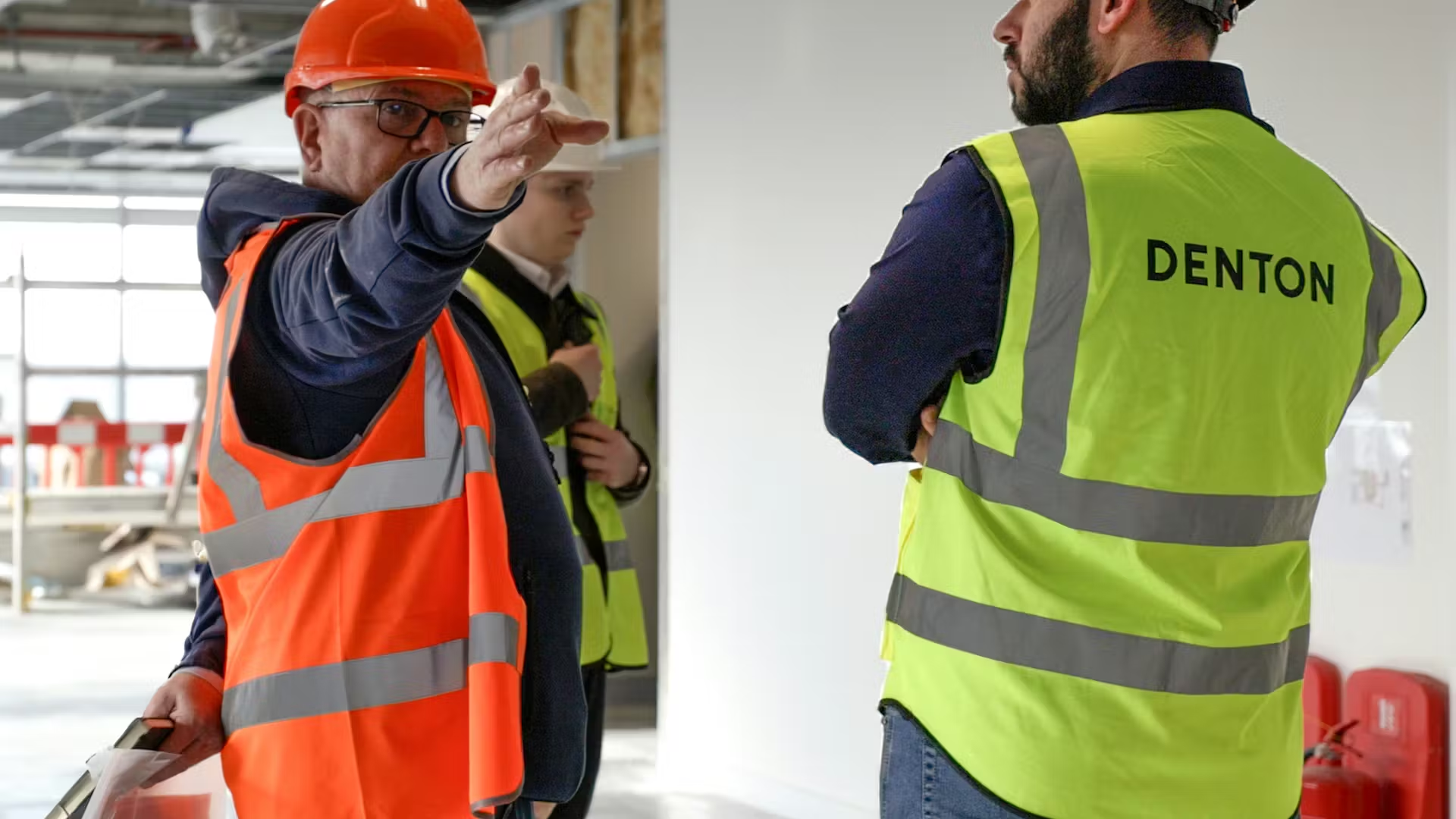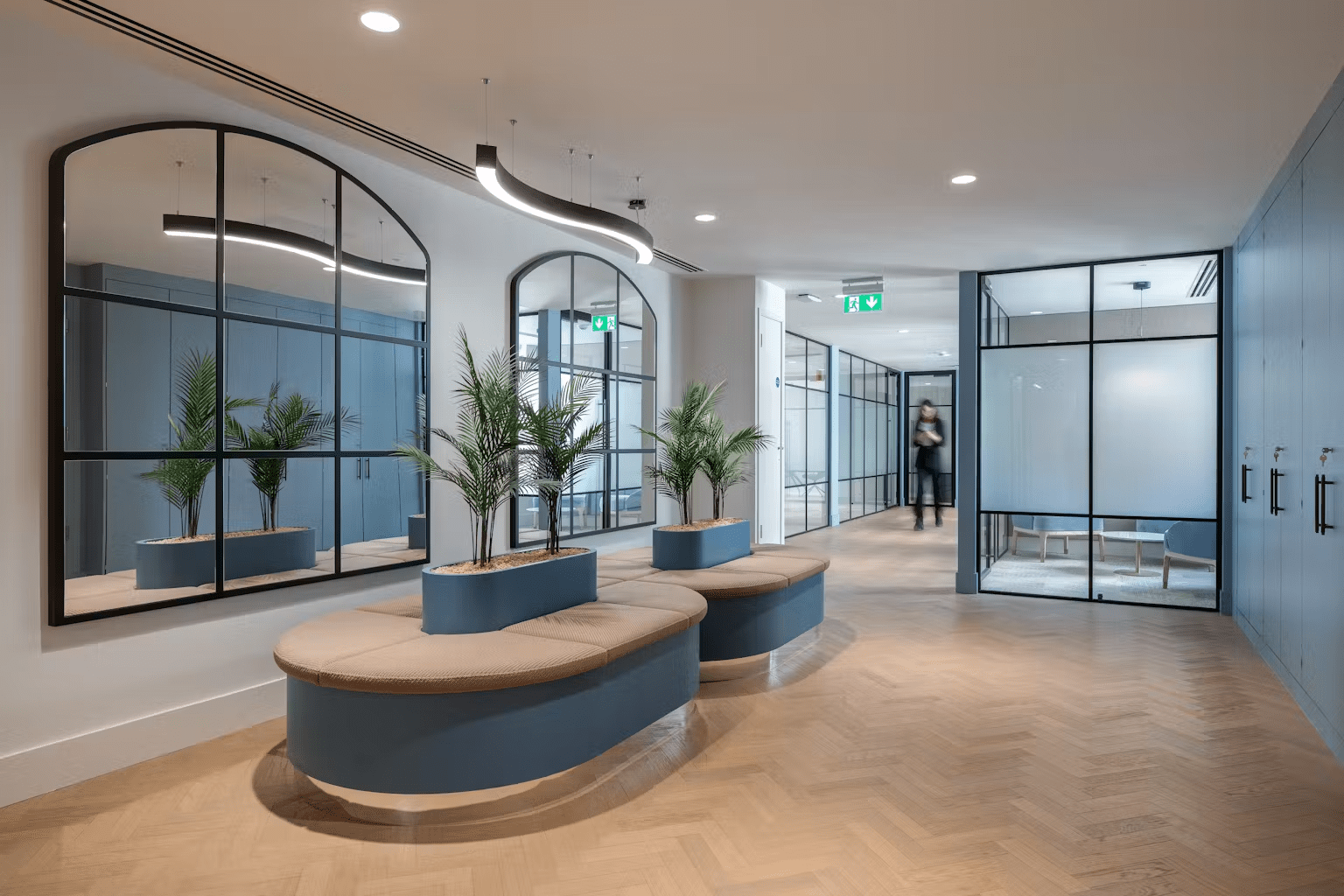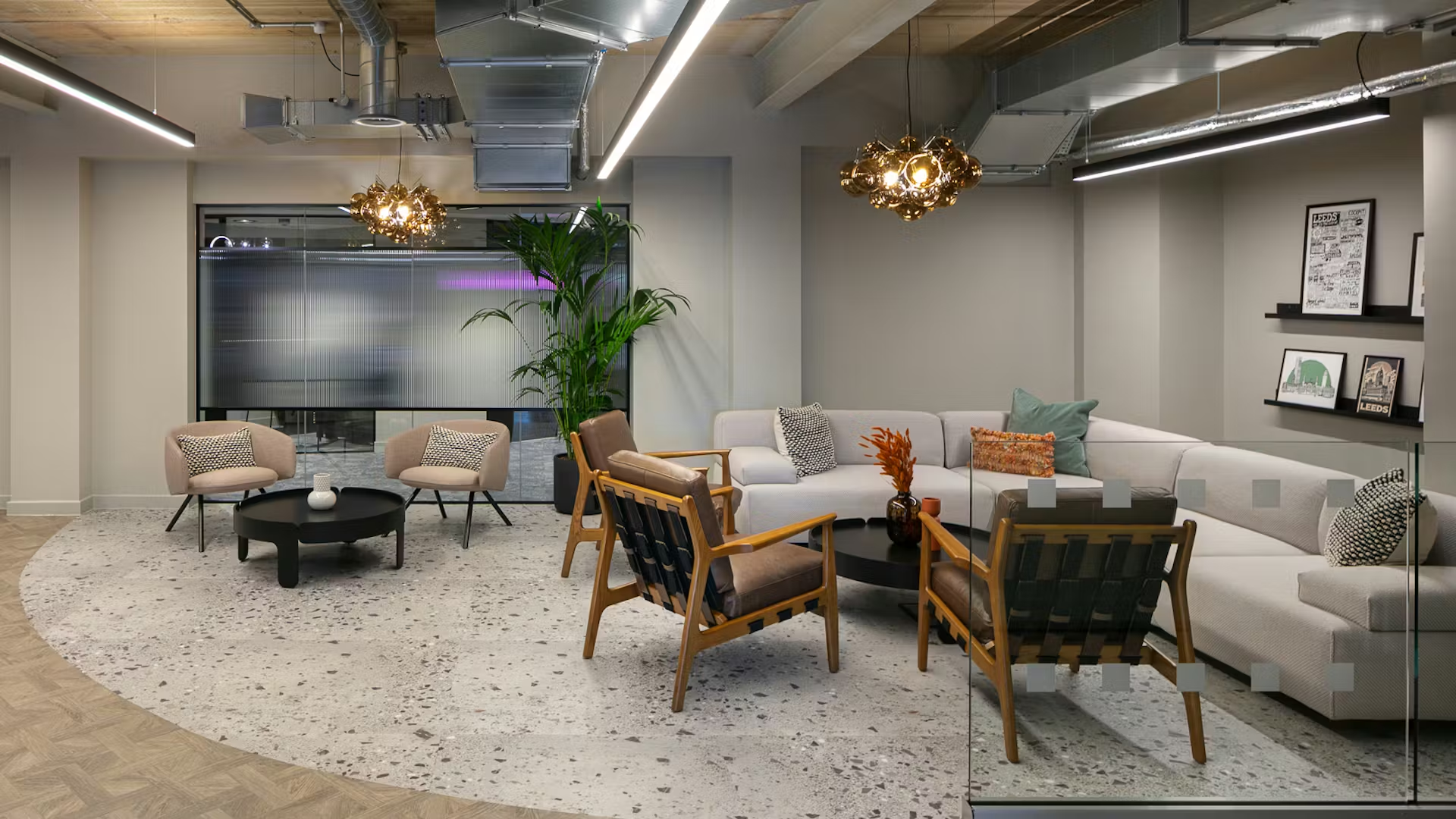
In today’s fast-moving world, many organisations cannot afford to close their doors or pause operations entirely while undergoing an office transformation. Whether you’re upgrading to a hybrid workspace, refreshing your brand identity, or embedding sustainability measures, delivering a fit-out in a live environment (i.e. while staff are working) is a delicate balancing act. But done well, it can unlock significant value and position you as a partner who understands operations, not just construction.
Here’s how DENTON approaches disruption-free fit-outs, along with best practices, risk mitigations and real-world tips.
Why It Matters More Than Ever
- Minimise downtime / protect productivity: Reducing business disruption preserves revenue, morale and operational momentum.
- Tenant retention & reputation: For landlords and occupiers alike, delivering a smooth experience helps maintain trust and future renewals.
- ESG and wellness expectations: Employees increasingly expect workplaces that are healthy, comfortable and resilient, even during upgrades.
- Complexity of modern offices: With integrated technology, IoT, critical systems, security and connectivity all embedded, a live fit-out must coordinate everything without collapse.
Learn more about our integrated Office Design & Build approach.
Key Strategies for Disruption-Free Fit-Outs
Below are the core tactics and principles that guide a high-performance, live environment retrofit:
1. Rigorous Planning & Phasing
- Zoning and sequential phasing: Divide the workspace into zones and execute the fit-out in phases. Only one zone (or sub-zone) is under construction at a time, keeping the remainder fully operational.
- Night and off-peak working: Schedule heavy/dust trades during evenings, weekends or out-of-hours slots where possible.
- Mockups/prototypes first: Build a “test zone” to validate sequence, access, acoustics, finishes and logistics before full roll-out.
- Detailed staging: Map all deliveries, materials staging, waste removal, scaffolding and access routes to avoid interference with staff movement.
- Critical path mapping: Identify dependencies (e.g., ductwork before ceilings, cabling before finishes) and buffer time in the schedule.
2. Temporary Infrastructure & Continuity Systems
- Redundant services: Set up temporary power, lighting, HVAC and IT circuits so essential systems stay live even as core systems are worked on.
- IT/telecom continuity: Maintain connectivity by using backup networks, wireless failover, staged cabling, or temporary switch rooms.
- Dust control & containment: Use sealed hoardings, negative-pressure systems, airlocks, and dust curtains to isolate construction zones.
- Acoustic isolation: Use sound-absorbing hoardings, soft board layering and vibration dampeners near noisy works.
- Clean routes and “no-dust paths”: Designate protected walkways, buffer zones, and cleaning protocols to allow staff to move through adjacent areas safely.
3. Coordination, Communication & Stakeholder Management
- Integrated project team: Ensure architects, M&E engineers, contractors, facility managers and operations teams are aligned from day one.
- Regular site coordination: Daily stand-ups, progress briefings, snag lists and communication with stakeholders.
- Change control: Rigorous process to manage scope alterations mid-project.
- Staff engagement & transparency: Inform occupants in advance of works, schedules, noise windows, alternative routes, and what to expect. Use signage, email updates or even video briefings.
- Contingency planning: Always have fallback plans for delays, inclement weather, access issues or material constraints.
4. Quality, Testing & Progressive Handover
- Prefabrication and offsite work: Where possible, build modules, panels or furniture offsite, then deliver to the site for rapid installation.
- Early commissioning & testing: Commission services (Lighting, HVAC, fire, security) in each zone early, so the zone is ready before user occupancy.
- Staggered handover: Handover zones progressively as they pass snagging/QA checks, rather than waiting for the full project.
- Post-occupancy fine-tuning: Once occupants move in, monitor performance (air quality, acoustics, thermal comfort) and make adjustments.
- Snagging and punch-lists in real time: Identify and resolve issues immediately while construction crews are still mobilised.
Specific Challenges to Watch Out For
- Interference with sensitive operations: Labs, data centres, server rooms, trading floors or research zones may have zero tolerance to interruption. Extra care, scheduling and redundancy are needed.
- Vertical circulation & core works: Stairwells, lifts, risers or vertical shafts often are shared — construction here must be carefully segregated.
- Building regulations & permitting: Even in live settings, all works must stay compliant (fire escape, structural changes, acoustic separation).
- Health & safety of occupants: Strict adherence to site safety, PPE, pathways and emergency routes is non-negotiable.
- As-built accuracy vs legacy drawings: Older buildings often have discrepancies between drawings and reality; early site verification reduces surprises.
- Logistics congestion: Especially in central urban settings, delivery windows, crane usage, loading bays and traffic need orchestration.
At DENTON, our Workplace Consultancy team helps identify these challenges early, ensuring your live project runs safely and efficiently.
Best Practice: Sustainability, Wellbeing & Certification
Retrofitting or refurbishment in a live environment doesn’t mean compromising sustainability or occupant health. Indeed, it’s an opportunity to embed better systems from day one:
- Use low-VOC paints, adhesives, finishes and materials aligned with BREEAM or SKA guidance.
- Sequence works to minimise waste, reuse salvageable elements and streamline waste segregation.
- Improve thermal, lighting and ventilation systems incrementally – introduce controls, sensors and energy metering as early as initial phases.
- Monitor indoor air quality and acoustic performance during and after works to ensure occupant comfort.
- Leverage prefabrication, modular systems and digital fabrication to reduce on-site waste and speed installation.
Learn more about our Sustainable Office Fit-Out service.
The Blueprint for a Smooth Live Office Fit-Out
- Invest heavily in planning, phasing and logistics.
- Ensure redundancy and temporary services to keep core operations online.
- Enforce rigorous coordination, communication and stakeholder management.
- Adopt modular, prefabricated, high-quality work and proactive handover.
- Embed sustainability and wellbeing principles from day one.
If you’re considering a live-environment fit-out – whether CAT A, CAT A+ or CAT B – DENTON has the experience, integrated delivery model and design-led, responsible approach to make sure operations keep running while your space evolves. Contact us to discuss how we can tailor a disruption-minimal strategy for your next project.
Learn more about what a CAT A or CAT A+ fit-out includes.