How to avoid the quiet quitting workplace trend - DENTON
What is the quiet quitting trend, and is it real?
We’ve said it before, but the workplace has changed drastically post-pandemic. Employees are expecting more from their employers, and when those expectations are not met, many are adopting a ‘new’ workplace trend which has been shared recently on TikTok and other social channels; quiet quitting.
Not heard of it yet? Quiet quitting is a rejection of hustle culture and a reclaiming of a work-life balance. Put simply, it’s not actually quitting your job. It’s quitting the idea of going above and beyond in your day-to-day work. Rather than being a completely new way of working, it’s more a new definition of something which has become more prevalent in businesses recently.
Contents:
1. Why are people quiet quitting?
2. How can we avoid employees quiet quitting?
3. The 4 pillars of happiness at work
4. DENTON, designing office spaces promoting employee motivation
DENTON
Why are people quiet quitting?
For many of us, the pandemic was a chance to slow down and spend more time at home, whether with family or alone, exploring new hobbies. This gave us a chance to re-evaluate what was important and in some cases, to consider whether our workplace was the right fit and allowed a healthy work-life balance. While this has led to an unprecedented number of employees leaving their jobs due to job dissatisfaction and a search for a better work-life balance, many have instead chosen the approach of quiet quitting.
Gallup’s global workplace report for 2022 showed that only 9% of workers in the UK were engaged or enthusiastic about their work, ranking 33rd out of 38 European countries. The other 91% of unengaged workers are often those who ‘quiet quit’ and, in many cases, signals an eventual desire to move on.
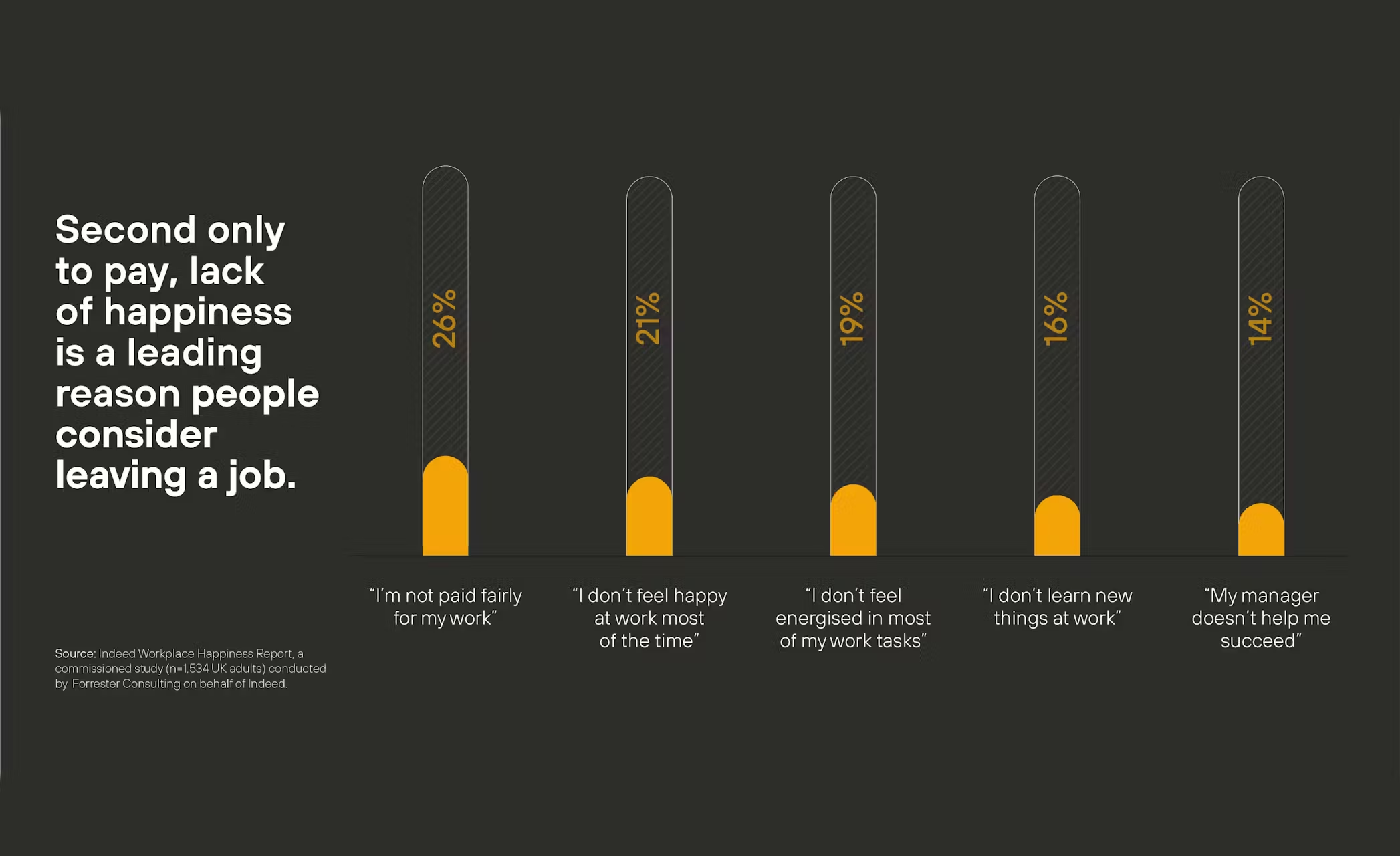
Another recent study by the Development Academy showed 69% of unhappy workers don’t feel valued and was the number 1 reason for being unhappy at work. On the flip-side, of the happy employees, 73% said that the main reason was a good team spirit and enjoying working with their colleagues. One fact is clear from these statistics: employees are only quiet quitting due to a poor workplace environment, and that is something which can be improved.
DENTON
How can we avoid employees quiet quitting?
In the time of the Great Resignation, due to job dissatisfaction and a search for a better work-life balance, employers are considering what they can do to prevent employees from leaving their jobs or adopting a quiet quitting style of work. Staff going above and beyond is often what helps businesses deliver outstanding customer service, so it’s no wonder it’s been a worry for so many.
Instead of seeing quiet quitting as a trend that’s harming the workplace, employers should see it as an opportunity to improve their workplace environment and culture. As discussed above, those that leave or quiet quit are those who are unhappy at work, and improving on your culture and environment can help alleviate stress and promote a healthy work-life balance.
Employees who receive adequate support from their manager, are given growth opportunities, and are rewarded for their work will be motivated to perform at the highest level. It’s up to employers to create the environment in which that happens.
Here are our top tips for promoting motivation and avoiding quiet quitting in your workplace:
Build trust
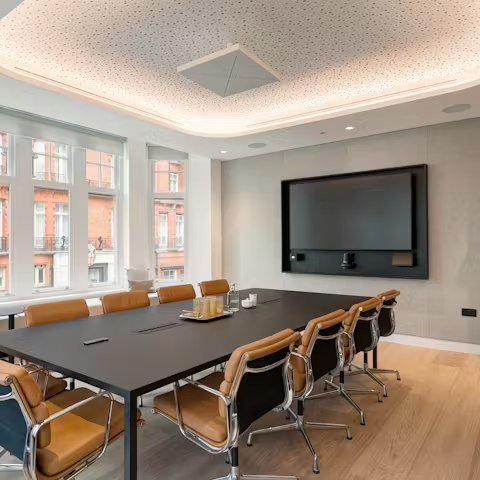
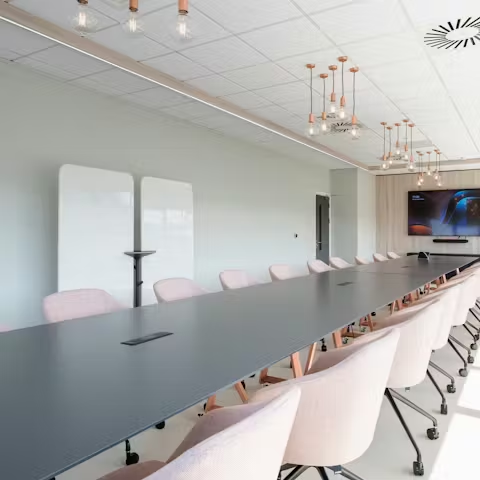
Create an environment that fosters open communication and support. Provide private meeting rooms for regular one-to-one meetings, as well as collaboration spaces for regular team meetings where you share ideas and listen to the team and take on board their suggestions.
Daniel Swepson, Head of Marketing at Next Chapter, echoes this tip in his own advice;
“People want to be trusted by their employer, they want to have flexibility and to be treated with fairness as a human being, not like a robot or piece of machinery, and the quiet quitting movement we’re seeing grow is evidence of that.”
Provide autonomy
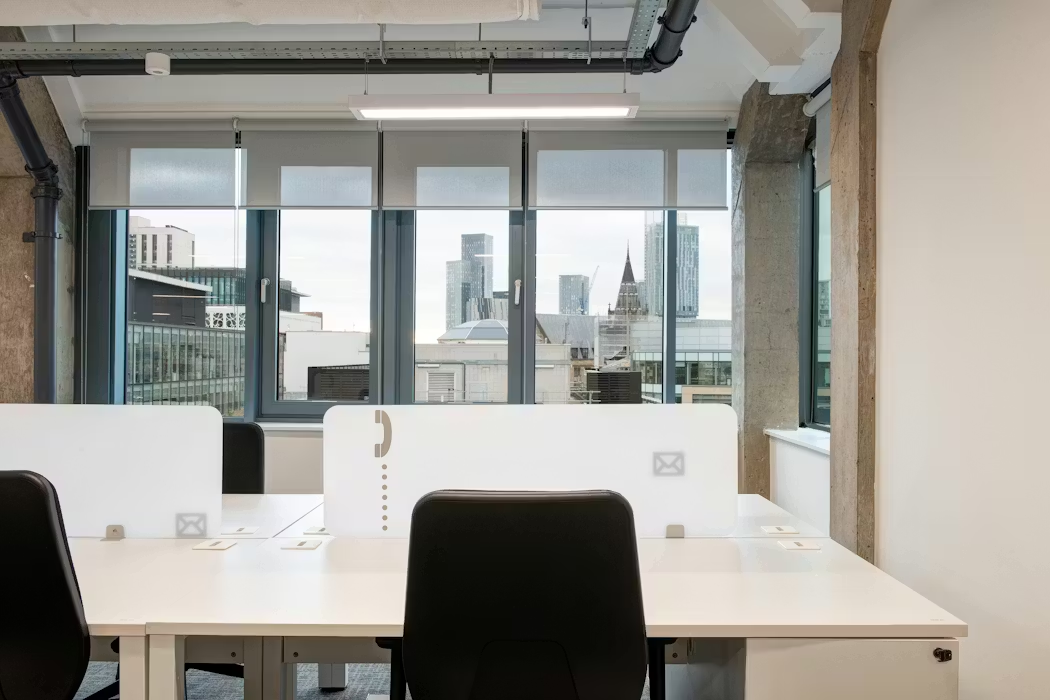
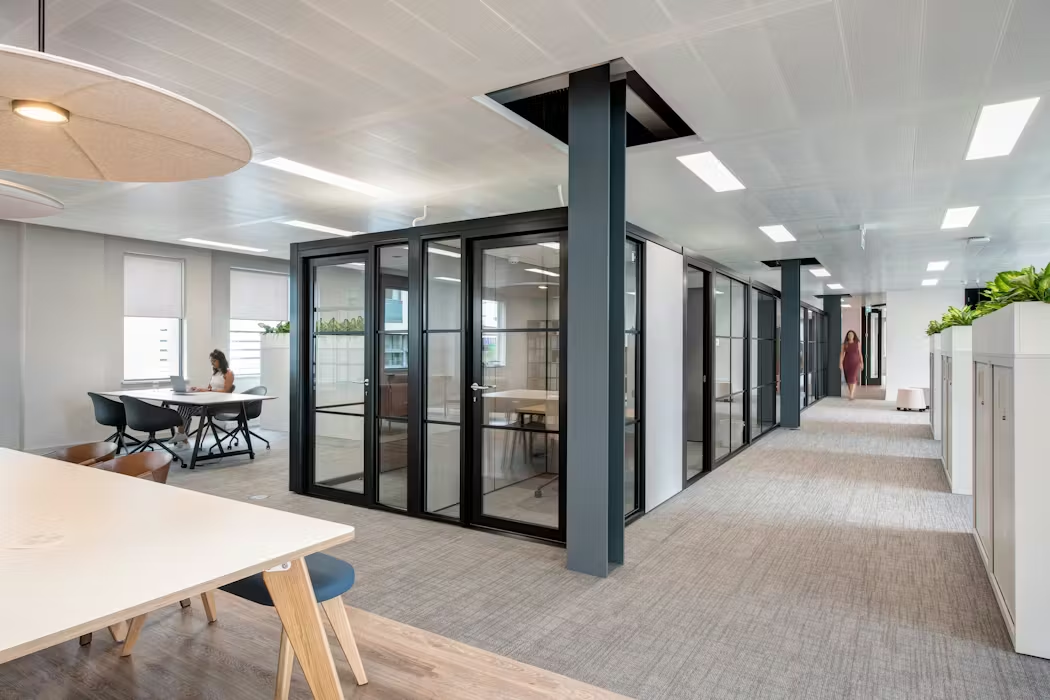
Give people a choice of how they work and where they work, whether it’s hybrid working or choosing where in the office they sit for the day. Let them decide how best to complete their task depending on the work they are carrying out. As Daniel Swepson explains, offering flexibility is key in a modern office;
“Looking back in history, humans haven’t always worked set days between set times, Monday to Friday 9 to 5 in the grand scheme of things hasn’t been around for that long. But that doesn’t mean it’s the best way for people to be productive. I think what we’re going through now is just another period of industrial change whereby the best way to get productivity and value out of a workforce is to enable them some flexibility to work hours that suit them and in environments that work for them.”
Celebrating shared achievements
Recognition of hard work, which has paid off and celebrating company milestones is key to boosting morale and making that celebration all that much sweeter, knowing what and how you contributed to the overall business’s success. And celebrating colleagues’ success is a great way to bond and form closer team environments – which, as we mentioned earlier, can have a huge effect on staff happiness.
The 4 pillars of happiness at work
As discussed earlier, on top of improving the workplace environment, employee wellbeing and happiness is another factor which should be improved to avoid a quiet quitting culture. We spend nearly a third of our lives at work and finding ways to be genuinely happy is undoubtedly an achievement in and of itself! Here, we explore four ways businesses can promote happiness through the design of their offices.
People
Collaboration and connection with colleagues are essential within the workspace. Build an environment of openness, honesty, and vulnerability, encouraging communication and relationships.
Purpose
It is important that the organisation’s purpose is aligned with the purpose of the individual employee and should therefore be clearly communicated to provide direction, motivate people internally and connect them. It builds a story and attracts talent.
Progress
Finding the ultimate balance between challenge and growing capabilities puts you in the so-called ‘flow’, allowing you to develop and progress with responsibility and recognition.
Positivity
Establish a better atmosphere, fostering creativity, enjoyment and inspiration at work. Positivity in the workplace is an important reason to come to work and even stimulates the learning curve!
DENTON, designing office spaces that inspire employee motivation
Need advice? As the longest-established design and build company in London with offices throughout the UK, we’ve partnered up with businesses and organisations of all shapes and sizes to design and craft incredible, bespoke and flexible offices which inspire creativity and happiness in employees. Check out our ESG policy for a in-depth look at how we aim to reduce our company’s carbon footprint, promote social responsibility, and champion diversity and inclusion in the workplace.
Let’s work together. If you need help improving your workplace environment to inspire happiness and prevent quiet quitting, drop our friendly, experienced team a line today.
Full quote from Daniel Swepson, Head of Marketing at Next Chapter:
“I think quiet quitting is something that’s been around for a while, we just haven’t had a name for it and businesses have never really felt it to be a pain like they are doing now. Looking back in history, humans haven’t always worked set days between set times, Monday to Friday 9 to 5 in the grand scheme of things hasn’t been around for that long. But that doesn’t mean it’s the best way for people to be productive. I think what we’re going through now is just another period of industrial change whereby the best way to get productivity and value out of a workforce is to enable them some flexibility to work hours that suit them and in environments that suit them. Hiring and retaining talent and a workforce is difficult enough at the minute, and any businesses that don’t adapt and move with the times are only going to find it even more difficult. People want to be trusted by their employer, they want to have flexibility and to be treated with fairness as a human being, not like a robot or piece of machinery, and the quiet quitting movement we’re seeing grow is evidence of that. A robot can’t quit and go work somewhere else, but employees can, they’re not the same and shouldn’t be treated so.”

Richard has been Board Director of DENTON since 1998. In addition to his board responsibilities, Richard has executive responsibility for DENTON’s Marketing and Sustainability services.
Richard is a Chartered Surveyor and holds degrees in Building Surveying, Construction Management and Interior Architecture. He is a highly regarded visiting lecturer at the University of Hertfordshire.
Have a project in mind?
- Experience
- Creativity
- Integrity
- Experience
- Creativity
- Integrity
- Experience
- Creativity
- Integrity
- Experience
- Creativity
- Integrity
- Experience
- Creativity
- Integrity
- Experience
- Creativity
- Integrity
- Experience
- Creativity
- Integrity
- Experience
- Creativity
- Integrity
- Experience
- Creativity
- Integrity
- Experience
- Creativity
- Integrity