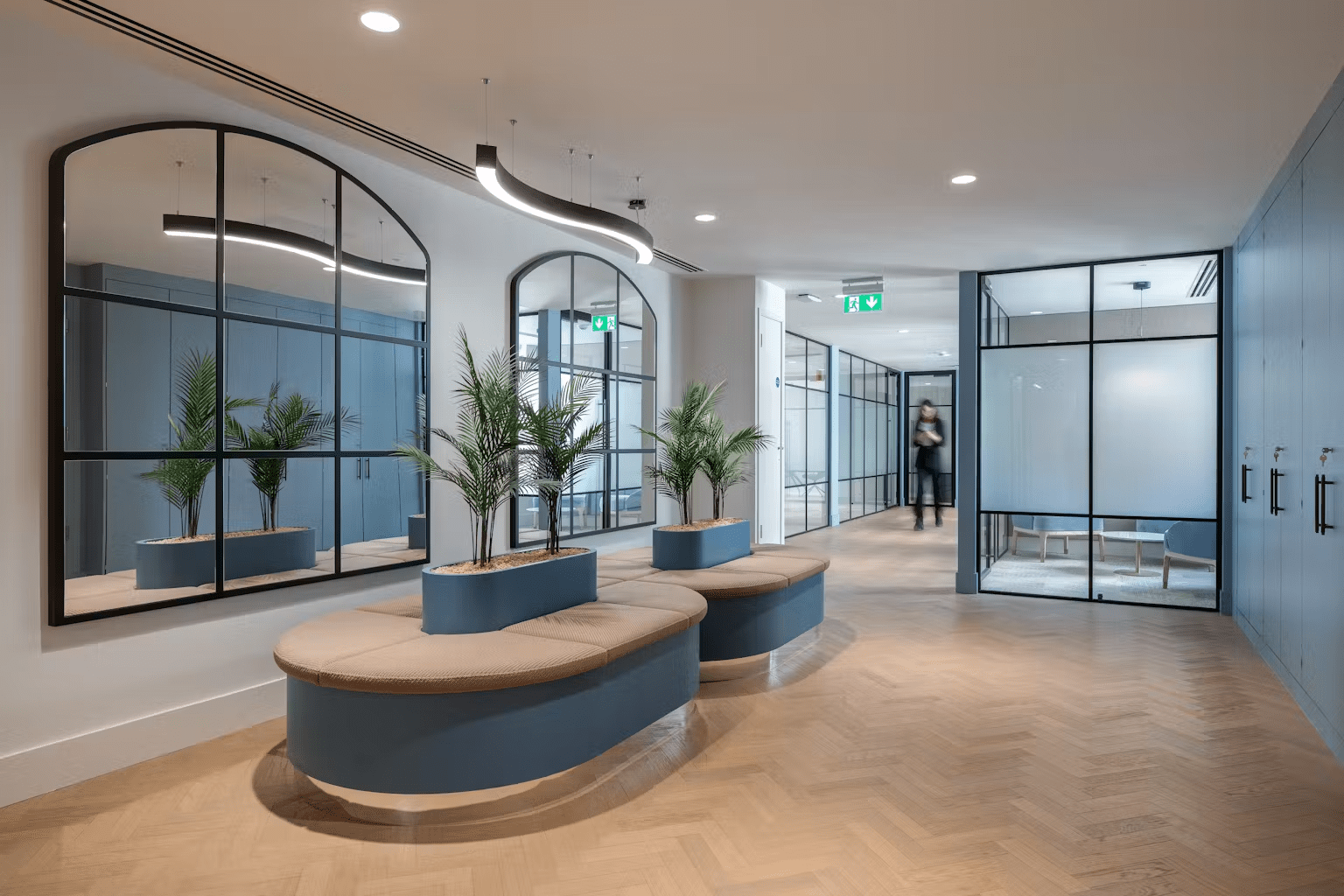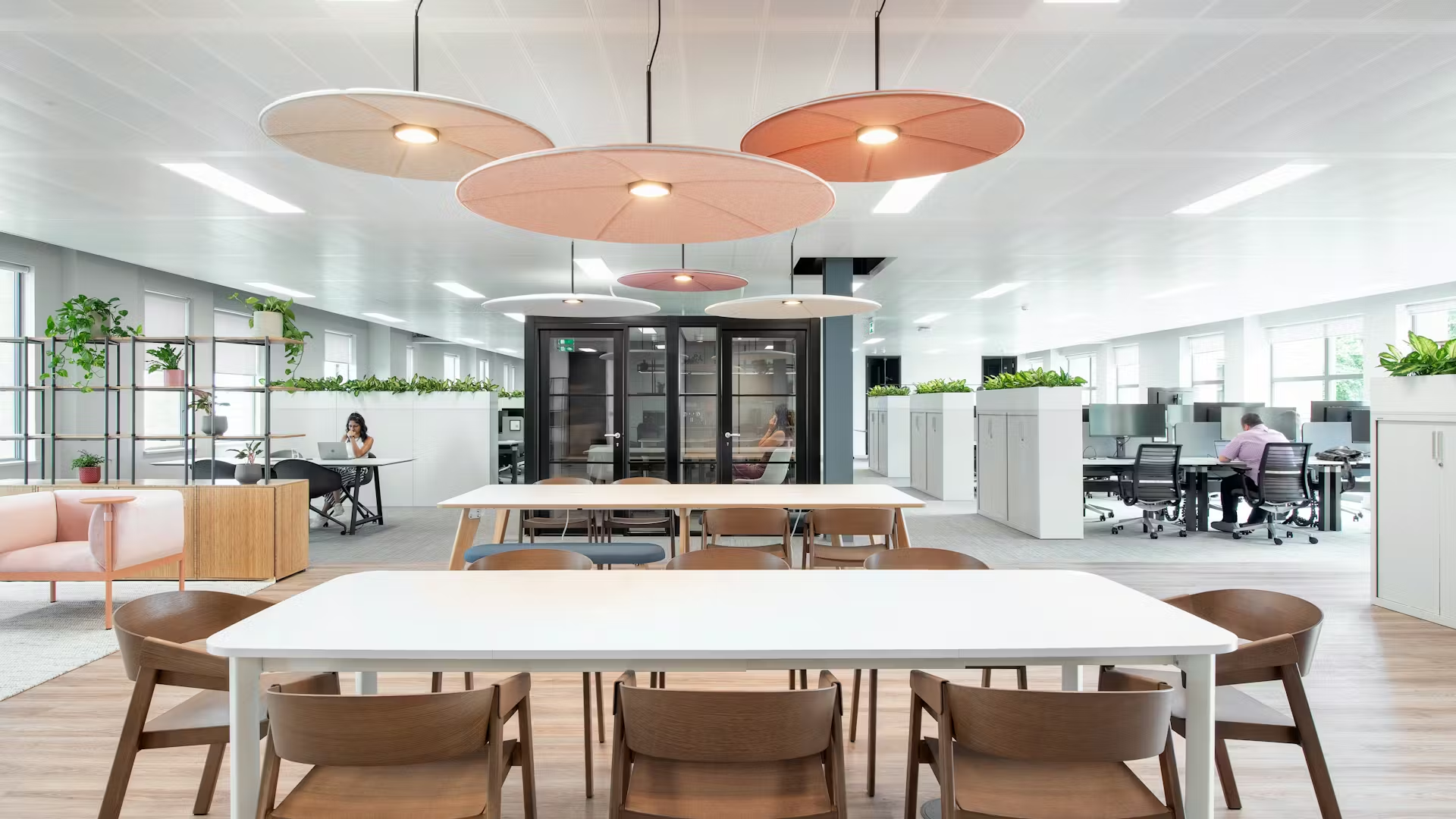
The demand for sustainable workplaces has grown exponentially, with businesses recognising the need for environmentally responsible designs that support both their workforce and the planet. Carbon-efficient office buildings are at the forefront of this movement, marrying functionality with sustainability to create spaces that reduce carbon emissions and environmental impact.
At DENTON, our commitment to responsible business practices drives our innovative approach to office design, ensuring workplaces not only meet current needs but also contribute to a greener future.
What is a Carbon-Efficient Office?
A carbon-efficient office is designed to minimise carbon emissions throughout its lifecycle, from construction to daily operations. The Circular Office Initiative exemplifies how reclaimed materials can reduce embodied carbon by 30%, demonstrating that thoughtful design choices can significantly contribute to sustainability goals while maintaining aesthetic and functional quality. It incorporates strategies that reduce energy consumption, optimise resource use, and enhance employee wellbeing. This goes beyond aesthetics—it’s about creating workspaces that leave a lighter footprint while supporting productivity and collaboration.
Richard Douglas, Director at DENTON, emphasises: “Designing carbon-efficient offices is not just about cutting emissions; it’s about creating adaptable, inspiring environments that align with the values of businesses and their employees.”
The Pillars of Carbon-Efficient Office Design
1. Sustainable Materials: Reducing Embodied Carbon
The choice of materials plays a critical role in reducing embodied carbon—the emissions generated during material production and construction. Opting for:
- Recycled or reclaimed materials, which can reduce embodied carbon by up to 40%, as demonstrated in research published by the Ellen MacArthur Foundation.
- Low-carbon concrete alternatives, such as those developed by companies like Material Evolution, can reduce pollution by up to 85% compared to conventional cement.
- FSC-certified timber, ensuring responsible forestry practices and a reduction in carbon emissions during procurement and construction phases, supported by data from the Forest Stewardship Council.
For instance, we often use reclaimed wood and recycled steel to create a visually striking and sustainable office environment. For example, check out our fit-out of Stevens & Bolton LLP.
Giuseppa Fiorenza, Head of Sustainability and Environment at DENTON, notes: “By carefully selecting sustainable materials, we can significantly reduce a building’s embodied carbon while supporting the circular economy.”
Learn more about sustainable materials in the office.
2. Energy Efficiency: Optimising Operations
Energy consumption in office buildings accounts for a significant portion of operational carbon emissions, with studies showing that commercial buildings contribute approximately 40% of total energy use globally. In the UK alone, non-residential buildings account for about 18% of total carbon emissions. Key strategies include:
- Installing energy-efficient HVAC systems.
- Integrating LED lighting and motion sensors.
- Incorporating renewable energy sources like solar panels.
3. Biophilic Design: Enhancing Air Quality and Well-being
Biophilic design integrates natural elements to improve indoor air quality and employee well-being. Research from the Harvard T.H. Chan School of Public Health highlights that biophilic offices can boost cognitive function by 26% and reduce absenteeism by 15%. Features such as living walls, which act as natural air purifiers, and maximised natural light not only enhance air quality but also create calming environments. In our project for Stevens & Bolton LLP the incorporation of green elements led to an increase in employee satisfaction, demonstrating the benefits of this approach. Features such as:
- Living walls and indoor plants.
- Maximised natural light.
- Ventilation systems prioritising fresh air.
These elements create healthier, more engaging spaces. Learn more about Biophilia in the office.
4. Flexible Layouts: Future-Proofing Spaces
Carbon efficiency includes adaptability. Offices designed for flexibility can:
- Evolve with organisational needs.
- Avoid unnecessary renovations or rebuilding.
By incorporating modular furniture and reconfigurable spaces in our Aegon office fit-out, we ensured minimal resource wastage while maintaining functionality.
Learn more about effective office layouts and embracing the future of the workplace.
5. Water Conservation: Smart Resource Use
Water-saving technologies reduce a building’s overall operational carbon footprint. Features such as:
- Low-flow fixtures.
- Rainwater harvesting systems.
- Greywater recycling.
The Impact of Carbon-Efficient Offices
Environmental Benefits
Reducing carbon emissions helps mitigate climate change while conserving natural resources. According to the Intergovernmental Panel on Climate Change (IPCC), limiting global warming to 1.5°C requires rapid reductions in carbon emissions across all sectors, including construction and building operations. Furthermore, studies from the World Resources Institute highlight that sustainable building practices can reduce emissions by up to 50% when combined with renewable energy use, underscoring the critical role of carbon-efficient designs. By designing offices with sustainability in mind, businesses contribute to a healthier planet.
Employee Wellbeing
Sustainable design promotes physical and mental health through improved air quality, natural lighting, and comfortable environments, leading to higher productivity and job satisfaction.
Financial Savings
Energy-efficient technologies and sustainable materials reduce operational costs over time, providing long-term financial benefits alongside environmental gains.
How DENTON Leads in Carbon-Efficient Office Design
At DENTON, sustainability is more than a buzzword—it’s one of our core values. Our projects consistently balance aesthetics, functionality, and environmental responsibility. By partnering with clients, we create workspaces that align with their goals while promoting a sustainable future.
Richard Douglas highlights: “Our expertise in carbon-efficient office design stems from a deep understanding of client needs and an unwavering commitment to sustainability.”
Giuseppa Fiorenza adds: “Every project is an opportunity to push boundaries and set new standards in sustainable office design.”
Moving Towards a Carbon-Efficient Future
Carbon-efficient office buildings are no longer a choice but a necessity for forward-thinking businesses. By embracing sustainable practices and innovative design, companies can create workplaces that inspire employees, delight clients, and protect the planet.
DENTON’s responsible business approach ensures every project contributes to a sustainable future. Ready to explore how carbon-efficient design can transform your workspace? Get in touch with our team of experts today.