• DENTON is acquired by Bowmer + Kirkland Group powering next stage of growth. Click to read more -
  • DENTON is acquired by Bowmer + Kirkland Group powering next stage of growth. Click to read more -
  • DENTON is acquired by Bowmer + Kirkland Group powering next stage of growth. Click to read more -
  • DENTON is acquired by Bowmer + Kirkland Group powering next stage of growth. Click to read more -
  • DENTON is acquired by Bowmer + Kirkland Group powering next stage of growth. Click to read more -
  • DENTON is acquired by Bowmer + Kirkland Group powering next stage of growth. Click to read more -
  • DENTON is acquired by Bowmer + Kirkland Group powering next stage of growth. Click to read more -
  • DENTON is acquired by Bowmer + Kirkland Group powering next stage of growth. Click to read more -
  • DENTON is acquired by Bowmer + Kirkland Group powering next stage of growth. Click to read more -
  • DENTON is acquired by Bowmer + Kirkland Group powering next stage of growth. Click to read more -
  • DENTON is acquired by Bowmer + Kirkland Group powering next stage of growth. Click to read more -
  • DENTON is acquired by Bowmer + Kirkland Group powering next stage of growth. Click to read more -
  • DENTON is acquired by Bowmer + Kirkland Group powering next stage of growth. Click to read more -
  • DENTON is acquired by Bowmer + Kirkland Group powering next stage of growth. Click to read more -
  • DENTON is acquired by Bowmer + Kirkland Group powering next stage of growth. Click to read more -
  • DENTON is acquired by Bowmer + Kirkland Group powering next stage of growth. Click to read more -
  • DENTON is acquired by Bowmer + Kirkland Group powering next stage of growth. Click to read more -
  • DENTON is acquired by Bowmer + Kirkland Group powering next stage of growth. Click to read more -
  • DENTON is acquired by Bowmer + Kirkland Group powering next stage of growth. Click to read more -
  • DENTON is acquired by Bowmer + Kirkland Group powering next stage of growth. Click to read more -
  • DENTON is acquired by Bowmer + Kirkland Group powering next stage of growth. Click to read more -
  • DENTON is acquired by Bowmer + Kirkland Group powering next stage of growth. Click to read more -
  • DENTON is acquired by Bowmer + Kirkland Group powering next stage of growth. Click to read more -
  • DENTON is acquired by Bowmer + Kirkland Group powering next stage of growth. Click to read more -
  • DENTON is acquired by Bowmer + Kirkland Group powering next stage of growth. Click to read more -
  • DENTON is acquired by Bowmer + Kirkland Group powering next stage of growth. Click to read more -
  • DENTON is acquired by Bowmer + Kirkland Group powering next stage of growth. Click to read more -
  • DENTON is acquired by Bowmer + Kirkland Group powering next stage of growth. Click to read more -
  • DENTON is acquired by Bowmer + Kirkland Group powering next stage of growth. Click to read more -
  • DENTON is acquired by Bowmer + Kirkland Group powering next stage of growth. Click to read more -
  • DENTON is acquired by Bowmer + Kirkland Group powering next stage of growth. Click to read more -
  • DENTON is acquired by Bowmer + Kirkland Group powering next stage of growth. Click to read more -
  • DENTON is acquired by Bowmer + Kirkland Group powering next stage of growth. Click to read more -
  • DENTON is acquired by Bowmer + Kirkland Group powering next stage of growth. Click to read more -
  • DENTON is acquired by Bowmer + Kirkland Group powering next stage of growth. Click to read more -
  • DENTON is acquired by Bowmer + Kirkland Group powering next stage of growth. Click to read more -
  • DENTON is acquired by Bowmer + Kirkland Group powering next stage of growth. Click to read more -
  • DENTON is acquired by Bowmer + Kirkland Group powering next stage of growth. Click to read more -
  • DENTON is acquired by Bowmer + Kirkland Group powering next stage of growth. Click to read more -
  • DENTON is acquired by Bowmer + Kirkland Group powering next stage of growth. Click to read more -
  • DENTON is acquired by Bowmer + Kirkland Group powering next stage of growth. Click to read more -
  • DENTON is acquired by Bowmer + Kirkland Group powering next stage of growth. Click to read more -
  • DENTON is acquired by Bowmer + Kirkland Group powering next stage of growth. Click to read more -
  • DENTON is acquired by Bowmer + Kirkland Group powering next stage of growth. Click to read more -
  • DENTON is acquired by Bowmer + Kirkland Group powering next stage of growth. Click to read more -
  • DENTON is acquired by Bowmer + Kirkland Group powering next stage of growth. Click to read more -
  • DENTON is acquired by Bowmer + Kirkland Group powering next stage of growth. Click to read more -
  • DENTON is acquired by Bowmer + Kirkland Group powering next stage of growth. Click to read more -
  • DENTON is acquired by Bowmer + Kirkland Group powering next stage of growth. Click to read more -
  • DENTON is acquired by Bowmer + Kirkland Group powering next stage of growth. Click to read more -
  • DENTON is acquired by Bowmer + Kirkland Group powering next stage of growth. Click to read more -
  • DENTON is acquired by Bowmer + Kirkland Group powering next stage of growth. Click to read more -
  • DENTON is acquired by Bowmer + Kirkland Group powering next stage of growth. Click to read more -
  • DENTON is acquired by Bowmer + Kirkland Group powering next stage of growth. Click to read more -
  • DENTON is acquired by Bowmer + Kirkland Group powering next stage of growth. Click to read more -
  • DENTON is acquired by Bowmer + Kirkland Group powering next stage of growth. Click to read more -
  • DENTON is acquired by Bowmer + Kirkland Group powering next stage of growth. Click to read more -
  • DENTON is acquired by Bowmer + Kirkland Group powering next stage of growth. Click to read more -
  • DENTON is acquired by Bowmer + Kirkland Group powering next stage of growth. Click to read more -
  • DENTON is acquired by Bowmer + Kirkland Group powering next stage of growth. Click to read more -
  • Embracing Human-Centric Design in Office Fit-Outs
    10:33

    In today’s competitive landscape, the design of your office space can make a significant impact on your team’s wellbeing and productivity. Embracing human-centric design in office fit-outs is not just a trend but a crucial strategy for fostering a supportive and efficient work environment. This article explores the principles of human-centric design and provides actionable insights for implementing these concepts in your workplace.


    Introduction to Human-Centric Design


    Human-centric design focuses on creating spaces that prioritise the needs, comfort, and wellbeing of the people using them. In the context of office fit-outs, it involves designing workspaces that enhance productivity, foster collaboration, and support the health and happiness of employees.


    With the shift towards more diverse working practices, businesses must adapt their office environments to meet the evolving needs of their workforce. Human-centric design helps companies stay ahead by creating flexible and adaptable spaces that inspire and engage employees.


    Benefits of Human-Centric Design in Offices


    • Employee Wellbeing: Comfortable and supportive environments reduce stress and improve mental health. Implementing elements like ergonomic furniture and biophilic design can significantly enhance employee satisfaction.

    • Productivity and Efficiency: Thoughtful design minimises distractions and streamlines workflows. Offices that integrate natural light, good ventilation, and acoustic management see a noticeable boost in employee focus and output. Check out our recent article discussing Chrono-working and enhanced workplace productivity.

    • Talent Attraction and Retention: Modern, well-designed offices attract top talent and retain existing employees by reflecting a company’s commitment to their wellbeing.

    • Corporate Image and Culture: A workspace that embodies human-centric principles can enhance corporate identity and reflect a company’s dedication to its people.


    Key Principles of Human-Centric Office Design


    By considering the needs and preferences of individuals, businesses can craft environments that foster engagement and satisfaction. Here are some key human-centric design principles, along with clear examples of how to implement them in your office:

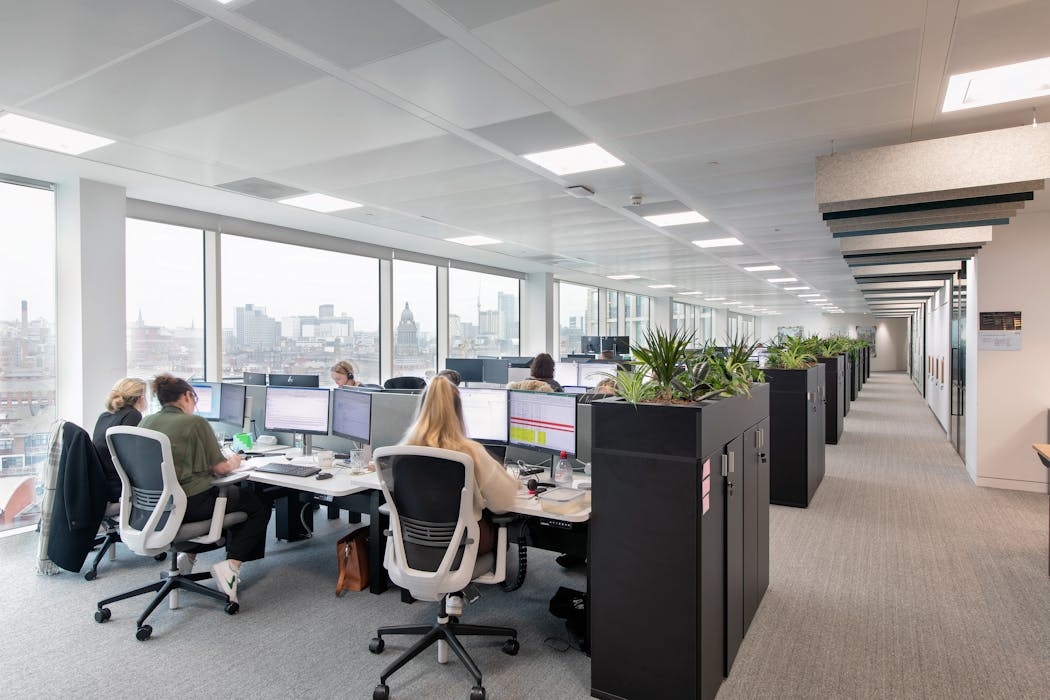
    • Workplace Ergonomics – Incorporate adjustable desks and ergonomic chairs to allow employees to customise their workstations for optimal comfort and posture. Adjustable desks should offer options to switch between sitting and standing positions, while ergonomic chairs should provide lumbar support and customisable armrests. These features help reduce the risk of repetitive strain injuries and support long hours of focused work.

    • Natural Light and Ventilation – Design the office with large windows or skylights to maximise the entry of natural light. Use glass partitions or open floor plans to ensure that light reaches all areas of the workspace. Additionally, implement advanced ventilation systems that allow for a steady flow of fresh air, which can enhance employee alertness and cognitive function.

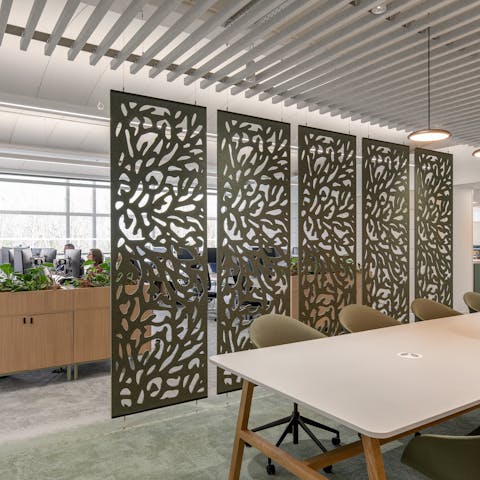
    • Acoustic Management – Integrate acoustic panels and sound-absorbing materials into the workspace to minimise noise distractions. Designate quiet zones with soundproofing features for deep work and ensure meeting rooms are equipped with acoustic treatments to maintain privacy and clarity during discussions. Noise-cancelling technology and white noise machines can also be used to manage sound levels effectively.

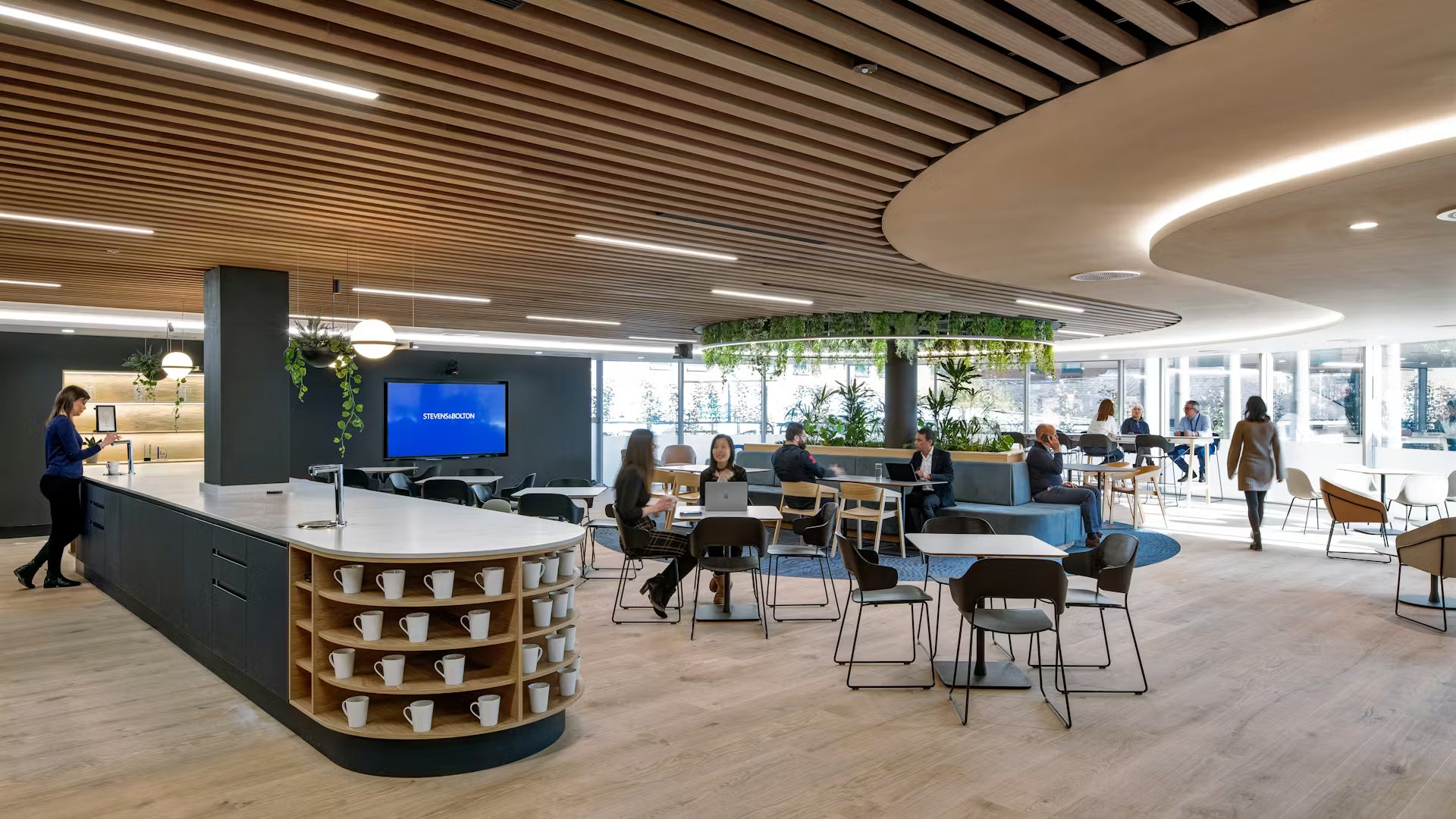
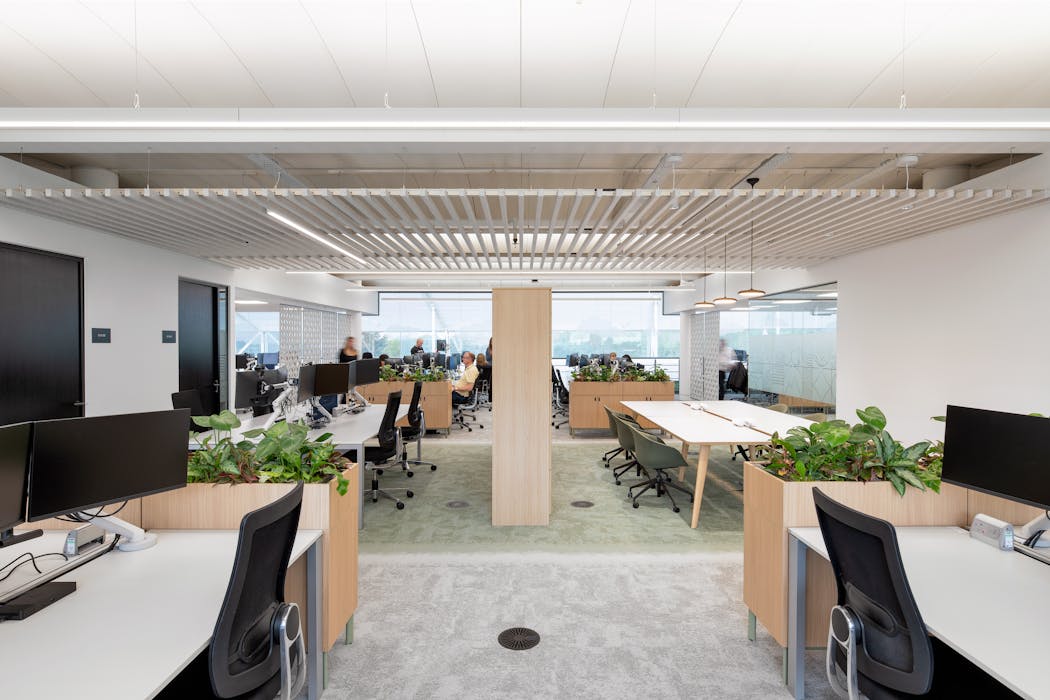
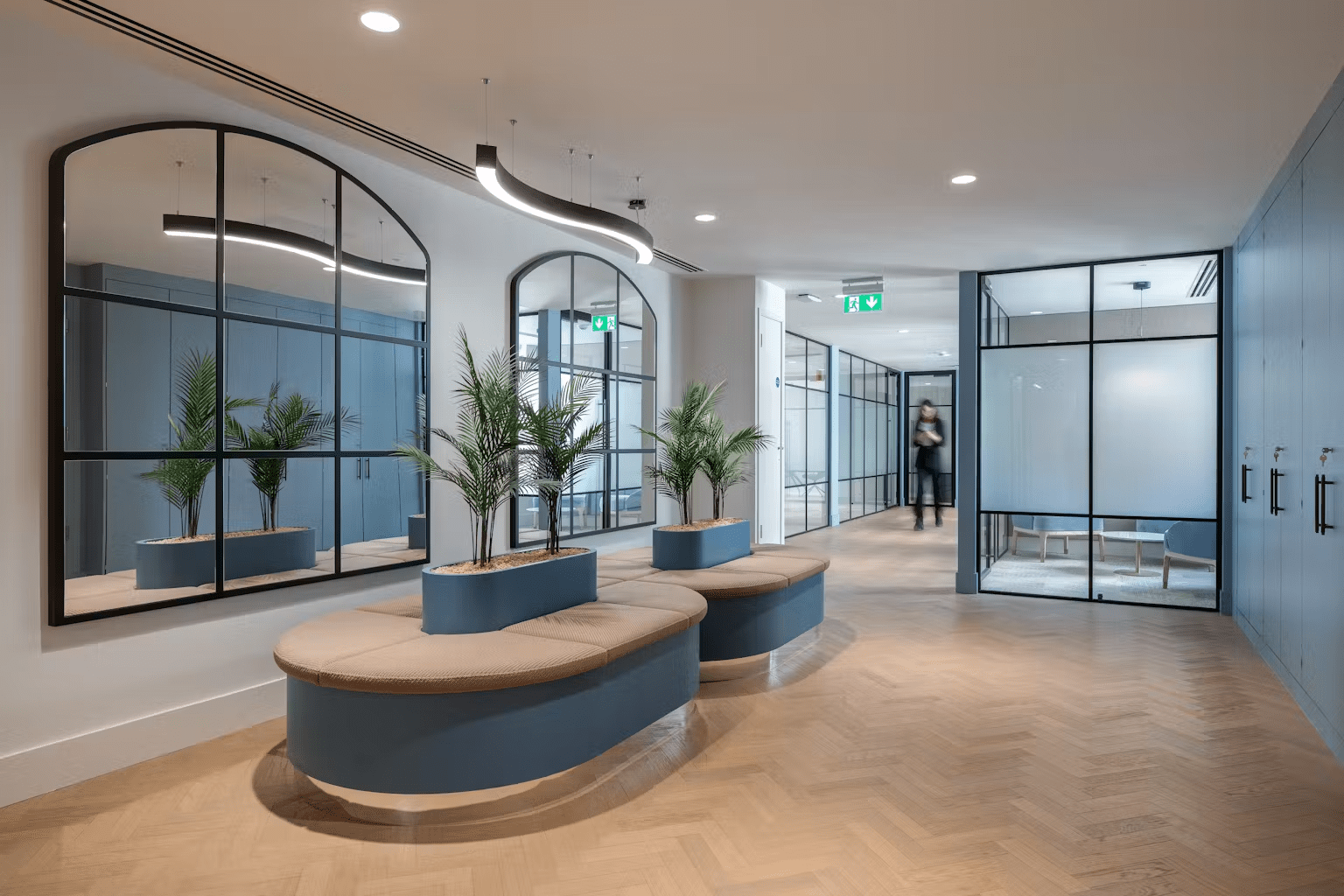
    • Biophilic Design – Incorporate indoor plants and natural elements into the office design to create a calming atmosphere and improve air quality. Use features like green walls or indoor gardens to bring nature into the workspace, which can enhance aesthetics and reduce stress among employees.

    • Flexibility and Adaptability – Use modular furniture and movable partitions to create versatile spaces that can be easily reconfigured to accommodate different projects and team sizes. Flexible layouts support various work styles, from collaborative brainstorming sessions to individual focus time, creating an agile workspace that adapts to changing needs.

    Expand
    2HpjyzBF-Adjustable-desks-and-ergonomic-chairs_Freeths-31-highres-Jpg
    Expand
    8bKuToDZ-Case-study_Freeths-05-highres-Jpg
    Expand
    3jlcDbf8-Biophilic-design_Aegon-24-highres-sRGB
    Expand
    7Wvuv70Z-Acoustic-management_Aegon-20-highres-sRGB
    Expand
    2HpjyzBF-Adjustable-desks-and-ergonomic-chairs_Freeths-31-highres-Jpg
    Expand
    8bKuToDZ-Case-study_Freeths-05-highres-Jpg
    Expand
    3jlcDbf8-Biophilic-design_Aegon-24-highres-sRGB
    Expand
    7Wvuv70Z-Acoustic-management_Aegon-20-highres-sRGB

    DENTON

    Lightbox Image

    Steps to Implement Human-Centric Design in an Office Fit-Out

    1. Needs Assessment: Conduct surveys and interviews with employees to understand their needs and preferences. Tailor the design to meet these insights.

    2. Collaboration with Designers: Work with workplace interior designers (did we hear someone say DENTON?) who specialise in human-centric design to create a workspace that aligns with your goals.

    3. Incorporate Technology: Use smart office technologies for lighting, climate control, and space utilisation to enhance efficiency and comfort.

    4. Sustainable Practices: Choose eco-friendly materials and energy-efficient systems to reduce environmental impact and promote a sustainable workplace.

    5. Iterative Feedback and Improvement: Continuously gather feedback from employees and adjust the design as needed to maintain a dynamic and supportive environment.


    DENTON Designed: Human-Centric Case Studies

    Freeths: Leeds & Sheffield


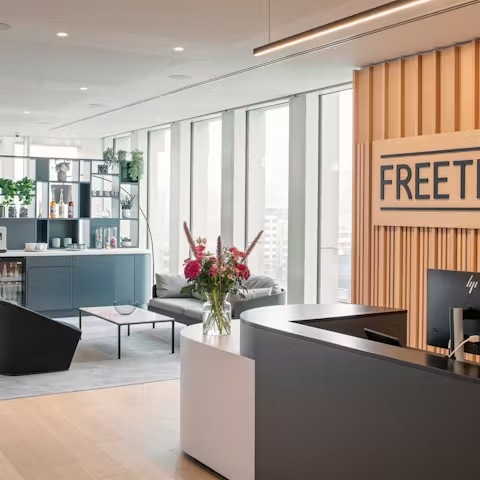
    Freeths LLP needed to expand their Leeds office to better reflect their growing team and brand. DENTON’s design team focused on sustainability and brand identity by retaining much of the existing layout and introducing agile breakout areas, focus rooms, and dedicated client zones. The design incorporated local art and personal touches to create a space that aligns with Freeths’ culture.


    Explore the Freeths office fit-out – including an interactive floorplan.


    Amnesty International


    Amnesty International restructured its office space to enhance efficiency and sustainability, transitioning from four floors to three. DENTON upgraded infrastructure to improve energy efficiency and created spaces like a multi-faith room and wellbeing area. The new layout fosters collaboration and supports employee wellness while achieving significant environmental improvements.


    Explore the Amnesty International office fit-out


    Aegon


    Aegon sought to revitalise its Peterborough office to reflect evolving workstyles and brand values. DENTON designed a flexible layout with agile workspaces and private areas, accommodating various work modes. Features like a client-experience lounge and graphic elements inspired by nature enhance productivity and overall employee engagement.


    Explore the Aegon office fit-out


    Challenges and Solutions

    Implementing human-centric design in office fit-outs can present several challenges. Here are some common obstacles and potential solutions:


    Budget Constraints

    • Challenge: High costs associated with renovating and outfitting offices with the latest design elements and technologies.

    • Solution: Prioritise key elements that have the most significant impact on employee wellbeing and productivity. For instance, focus on improving lighting and acoustics first, which can provide immediate benefits at a lower cost. Additionally, consider phased implementation to spread out expenses. Not sure what size office you need? Check out our office space calculator.

    Resistance to Change


    • Challenge: Employees may be hesitant to embrace new office designs, especially if they involve significant changes to their work habits.
    • Solution: Engage employees early in the design process through surveys, workshops, and feedback sessions. This involvement helps build buy-in and ensures the design meets their needs. Provide training sessions to help staff adapt to new technologies or workspace configurations.

    Space Limitations


    • Challenge: Small or awkwardly shaped offices may not easily accommodate desired design features.
    • Solution: Employ creative space-saving solutions such as multifunctional furniture, vertical storage, and flexible workstations that can be adjusted for different tasks. Emphasise the use of shared spaces to maximise utility and collaboration. Have you considered a more drastic solution like implementing hybrid work schemes – or even relocating your office?

    Balancing Privacy and Collaboration

    • Challenge: Designing spaces that support both individual focus work and collaborative activities without conflict.
    • Solution: Use zoning strategies to create distinct office neighbourhoods for different activities. Incorporate private pods or phone booths for focused work and quiet zones, alongside open spaces for collaboration. Acoustic management plays a crucial role in maintaining the balance between these areas.


    Future Trends in Human-Centric Office Design


    As workplaces continue to evolve, several emerging trends in human-centric design are shaping the future of office environments:


    • Remote Work Integration – With the rise of hybrid work models, offices are being designed to accommodate remote work seamlessly. Offices are incorporating advanced video conferencing technology, hot-desking systems, and dedicated spaces for remote collaboration to ensure smooth communication and teamwork regardless of location.

    • Wellness Facilities – Companies are increasingly focusing on employee wellness by providing on-site amenities that promote health and wellbeing. Some offices are going as far as integrating wellness rooms for yoga and meditation, on-site gyms, and relaxation zones with massage chairs and nap pods to help employees recharge during the workday.

    • Personalisation – Allowing employees to personalise their workspaces enhances comfort and satisfaction. This can be as simple as a space to hang photos or personal decor.

    • Sustainable Office Design – Sustainability is becoming a core focus in office design, with an emphasis on eco-friendly materials, ESG policies and energy-efficient systems.


    DENTON, Understanding a Human-centric Workplace


    Incorporating human-centric design in office fit-outs is essential for creating a workplace that promotes productivity, wellbeing, and employee satisfaction. By prioritising these principles, businesses can create dynamic and inclusive spaces that meet the diverse needs of their workforce.


    Ready to enhance your office space with human-centric design principles? Get in touch with DENTON today to start your journey towards a more productive and sustainable workplace.

    Ben Lott
    Ben Lott
    Design Director

    With ten years of experience in the design and build industry, Ben is highly passionate about his work as an Interior Designer. Through creative collaboration, Ben has been involved in many of the pivotal jobs that have come through the door at DENTON. He has built lasting relationships with our clients to create innovative solutions for their space.

    Have a project in mind?
    Project Image
    • Experience 
    • Creativity 
    • Integrity 
    • Experience 
    • Creativity 
    • Integrity 
    • Experience 
    • Creativity 
    • Integrity 
    • Experience 
    • Creativity 
    • Integrity 
    • Experience 
    • Creativity 
    • Integrity 
    • Experience 
    • Creativity 
    • Integrity 
    • Experience 
    • Creativity 
    • Integrity 
    • Experience 
    • Creativity 
    • Integrity 
    • Experience 
    • Creativity 
    • Integrity 
    • Experience 
    • Creativity 
    • Integrity