• DENTON is acquired by Bowmer + Kirkland Group powering next stage of growth. Click to read more -
  • DENTON is acquired by Bowmer + Kirkland Group powering next stage of growth. Click to read more -
  • DENTON is acquired by Bowmer + Kirkland Group powering next stage of growth. Click to read more -
  • DENTON is acquired by Bowmer + Kirkland Group powering next stage of growth. Click to read more -
  • DENTON is acquired by Bowmer + Kirkland Group powering next stage of growth. Click to read more -
  • DENTON is acquired by Bowmer + Kirkland Group powering next stage of growth. Click to read more -
  • DENTON is acquired by Bowmer + Kirkland Group powering next stage of growth. Click to read more -
  • DENTON is acquired by Bowmer + Kirkland Group powering next stage of growth. Click to read more -
  • DENTON is acquired by Bowmer + Kirkland Group powering next stage of growth. Click to read more -
  • DENTON is acquired by Bowmer + Kirkland Group powering next stage of growth. Click to read more -
  • DENTON is acquired by Bowmer + Kirkland Group powering next stage of growth. Click to read more -
  • DENTON is acquired by Bowmer + Kirkland Group powering next stage of growth. Click to read more -
  • DENTON is acquired by Bowmer + Kirkland Group powering next stage of growth. Click to read more -
  • DENTON is acquired by Bowmer + Kirkland Group powering next stage of growth. Click to read more -
  • DENTON is acquired by Bowmer + Kirkland Group powering next stage of growth. Click to read more -
  • DENTON is acquired by Bowmer + Kirkland Group powering next stage of growth. Click to read more -
  • DENTON is acquired by Bowmer + Kirkland Group powering next stage of growth. Click to read more -
  • DENTON is acquired by Bowmer + Kirkland Group powering next stage of growth. Click to read more -
  • DENTON is acquired by Bowmer + Kirkland Group powering next stage of growth. Click to read more -
  • DENTON is acquired by Bowmer + Kirkland Group powering next stage of growth. Click to read more -
  • DENTON is acquired by Bowmer + Kirkland Group powering next stage of growth. Click to read more -
  • DENTON is acquired by Bowmer + Kirkland Group powering next stage of growth. Click to read more -
  • DENTON is acquired by Bowmer + Kirkland Group powering next stage of growth. Click to read more -
  • DENTON is acquired by Bowmer + Kirkland Group powering next stage of growth. Click to read more -
  • DENTON is acquired by Bowmer + Kirkland Group powering next stage of growth. Click to read more -
  • DENTON is acquired by Bowmer + Kirkland Group powering next stage of growth. Click to read more -
  • DENTON is acquired by Bowmer + Kirkland Group powering next stage of growth. Click to read more -
  • DENTON is acquired by Bowmer + Kirkland Group powering next stage of growth. Click to read more -
  • DENTON is acquired by Bowmer + Kirkland Group powering next stage of growth. Click to read more -
  • DENTON is acquired by Bowmer + Kirkland Group powering next stage of growth. Click to read more -
  • DENTON is acquired by Bowmer + Kirkland Group powering next stage of growth. Click to read more -
  • DENTON is acquired by Bowmer + Kirkland Group powering next stage of growth. Click to read more -
  • DENTON is acquired by Bowmer + Kirkland Group powering next stage of growth. Click to read more -
  • DENTON is acquired by Bowmer + Kirkland Group powering next stage of growth. Click to read more -
  • DENTON is acquired by Bowmer + Kirkland Group powering next stage of growth. Click to read more -
  • DENTON is acquired by Bowmer + Kirkland Group powering next stage of growth. Click to read more -
  • DENTON is acquired by Bowmer + Kirkland Group powering next stage of growth. Click to read more -
  • DENTON is acquired by Bowmer + Kirkland Group powering next stage of growth. Click to read more -
  • DENTON is acquired by Bowmer + Kirkland Group powering next stage of growth. Click to read more -
  • DENTON is acquired by Bowmer + Kirkland Group powering next stage of growth. Click to read more -
  • DENTON is acquired by Bowmer + Kirkland Group powering next stage of growth. Click to read more -
  • DENTON is acquired by Bowmer + Kirkland Group powering next stage of growth. Click to read more -
  • DENTON is acquired by Bowmer + Kirkland Group powering next stage of growth. Click to read more -
  • DENTON is acquired by Bowmer + Kirkland Group powering next stage of growth. Click to read more -
  • DENTON is acquired by Bowmer + Kirkland Group powering next stage of growth. Click to read more -
  • DENTON is acquired by Bowmer + Kirkland Group powering next stage of growth. Click to read more -
  • DENTON is acquired by Bowmer + Kirkland Group powering next stage of growth. Click to read more -
  • DENTON is acquired by Bowmer + Kirkland Group powering next stage of growth. Click to read more -
  • DENTON is acquired by Bowmer + Kirkland Group powering next stage of growth. Click to read more -
  • DENTON is acquired by Bowmer + Kirkland Group powering next stage of growth. Click to read more -
  • DENTON is acquired by Bowmer + Kirkland Group powering next stage of growth. Click to read more -
  • DENTON is acquired by Bowmer + Kirkland Group powering next stage of growth. Click to read more -
  • DENTON is acquired by Bowmer + Kirkland Group powering next stage of growth. Click to read more -
  • DENTON is acquired by Bowmer + Kirkland Group powering next stage of growth. Click to read more -
  • DENTON is acquired by Bowmer + Kirkland Group powering next stage of growth. Click to read more -
  • DENTON is acquired by Bowmer + Kirkland Group powering next stage of growth. Click to read more -
  • DENTON is acquired by Bowmer + Kirkland Group powering next stage of growth. Click to read more -
  • DENTON is acquired by Bowmer + Kirkland Group powering next stage of growth. Click to read more -
  • DENTON is acquired by Bowmer + Kirkland Group powering next stage of growth. Click to read more -
  • DENTON is acquired by Bowmer + Kirkland Group powering next stage of growth. Click to read more -
  • Delivering an ESG Strategy through Office Design - DENTON
    12:02

    ESG Strategy in office fit-outs: why is it important & how is it achieved?


    ESG criteria are often used when discussing investment, but what relevance is there to consider when planning an office fit-out? And what exactly is an ESG strategy?

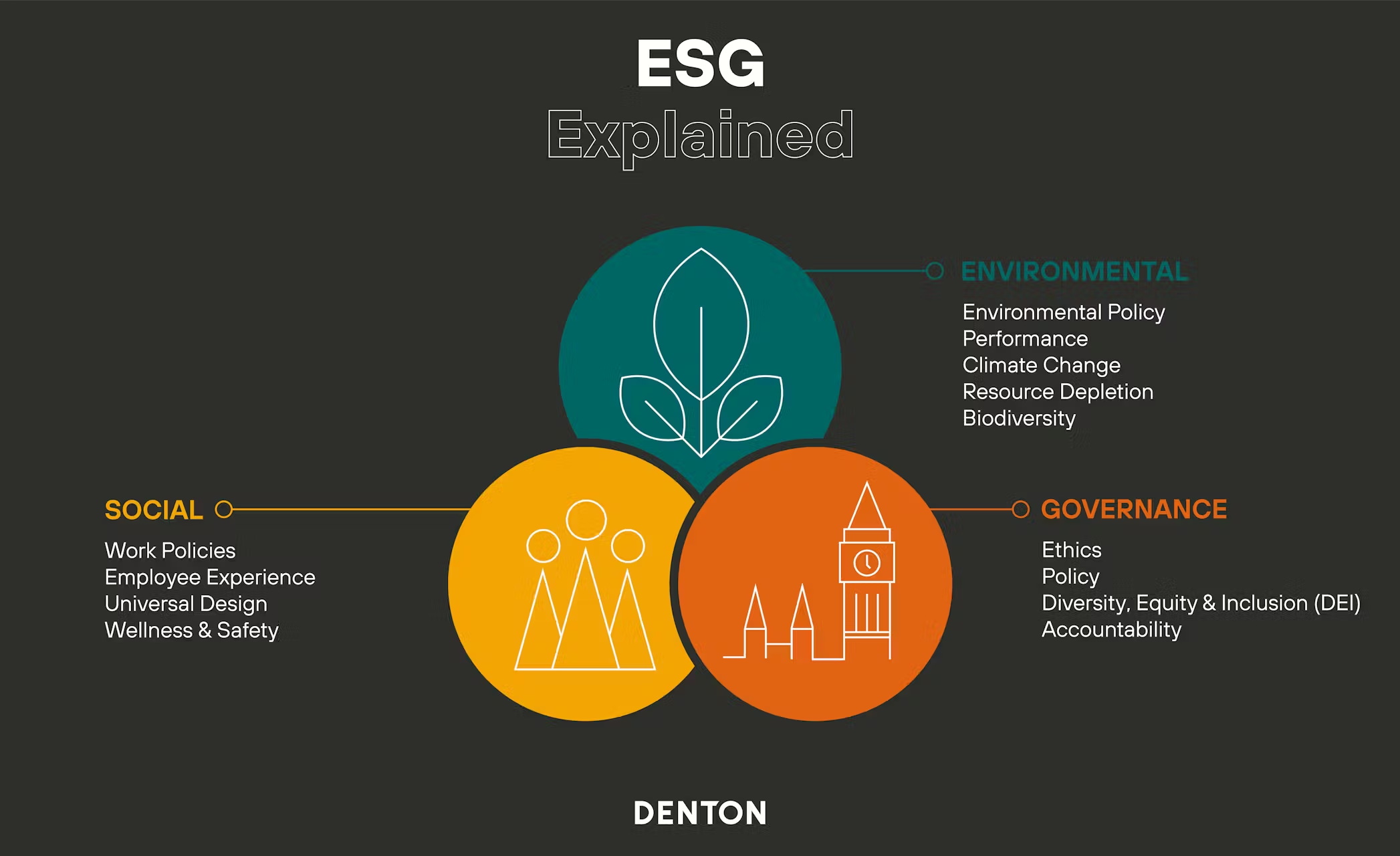
    Put simply, ESG is a set of criteria used to evaluate a company in three areas:

    • Environmental – How does the company strive to protect the environment?

    • Social – How does the company manage its relationships with employees, customers, the community and other stakeholders?

    • Governance – How is the company led and what is its ethical stance?

    Check out our own industry leading ESG policy for a in-depth look at how DENTON aim to reduce our company’s carbon footprint, promote social responsibility, and champion diversity and inclusion in the workplace.

    EXPAND
    ESG-Blog-Post-01

    DENTON

    Lightbox Image

    While these used to be considered voluntary for organisations, ESG criteria have been crucial for investors in identifying growth opportunities and areas of risk, meaning they are now top of corporate agendas. And it isn’t just important to business leaders and investors anymore. Research has shown 83% of consumers would like companies to invest in ESG criteria and 86% of employees want to work for an organisation that supports issues they care about. 

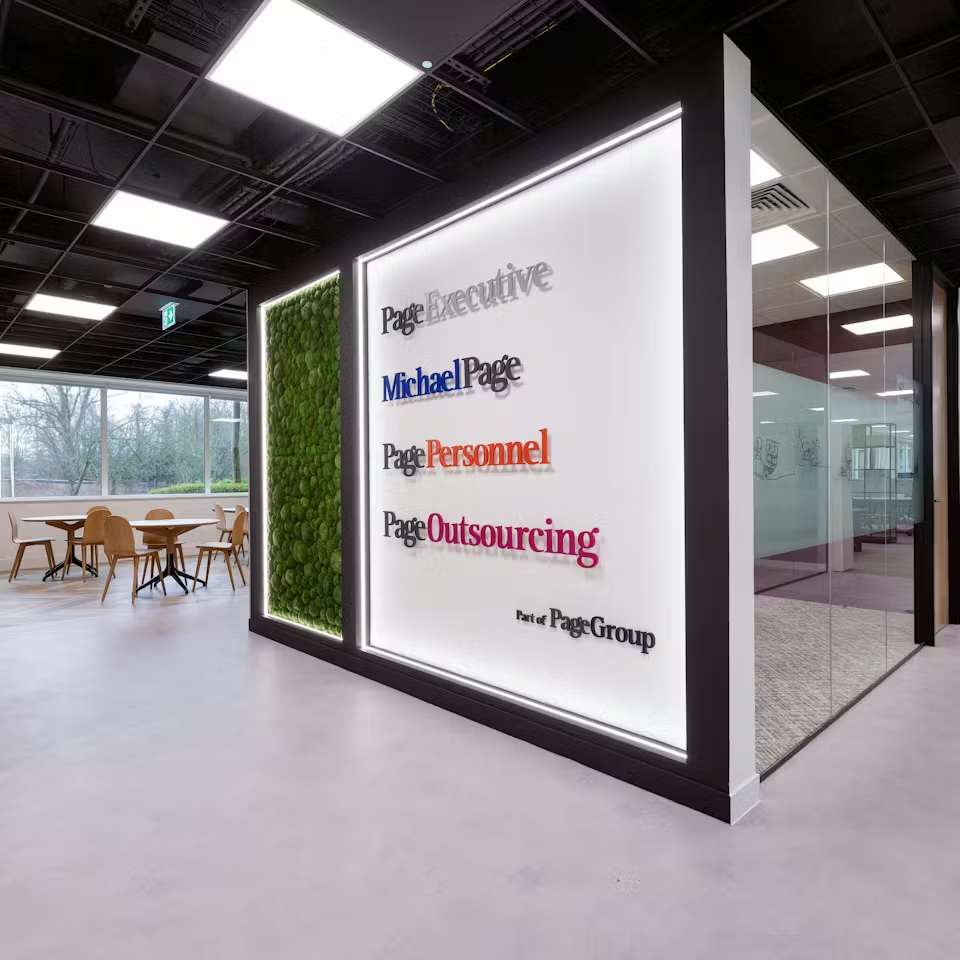
    So, how do you successfully show employees and consumers you are investing in ESG? That’s easy – use your office space. Your workplace should be a physical representation of your brand and its goals, and aligning these goals with an ESG strategy demonstrates your mission. It’s where you bring your employees, customers, and stakeholders together and have an impact on the local community.

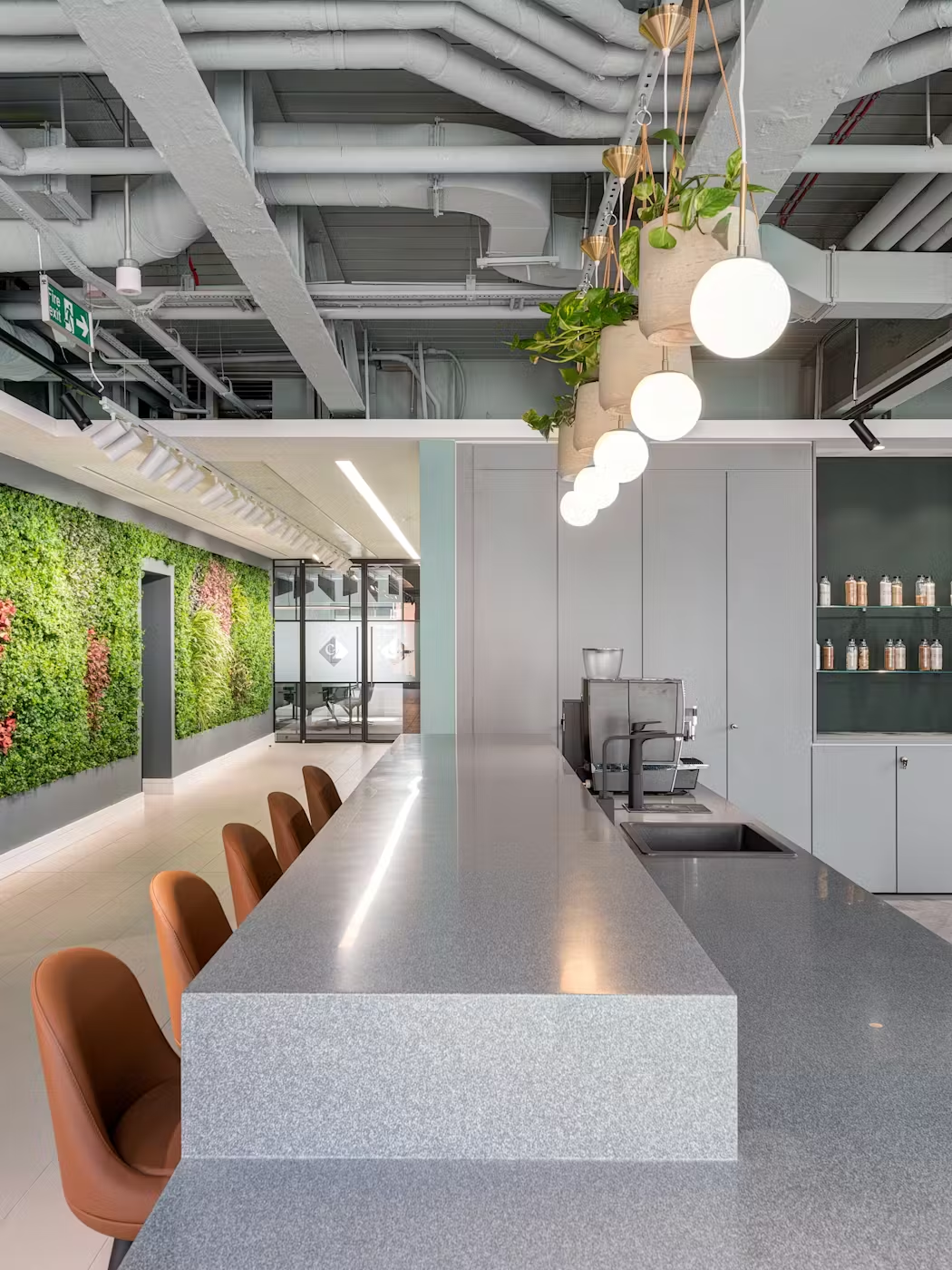
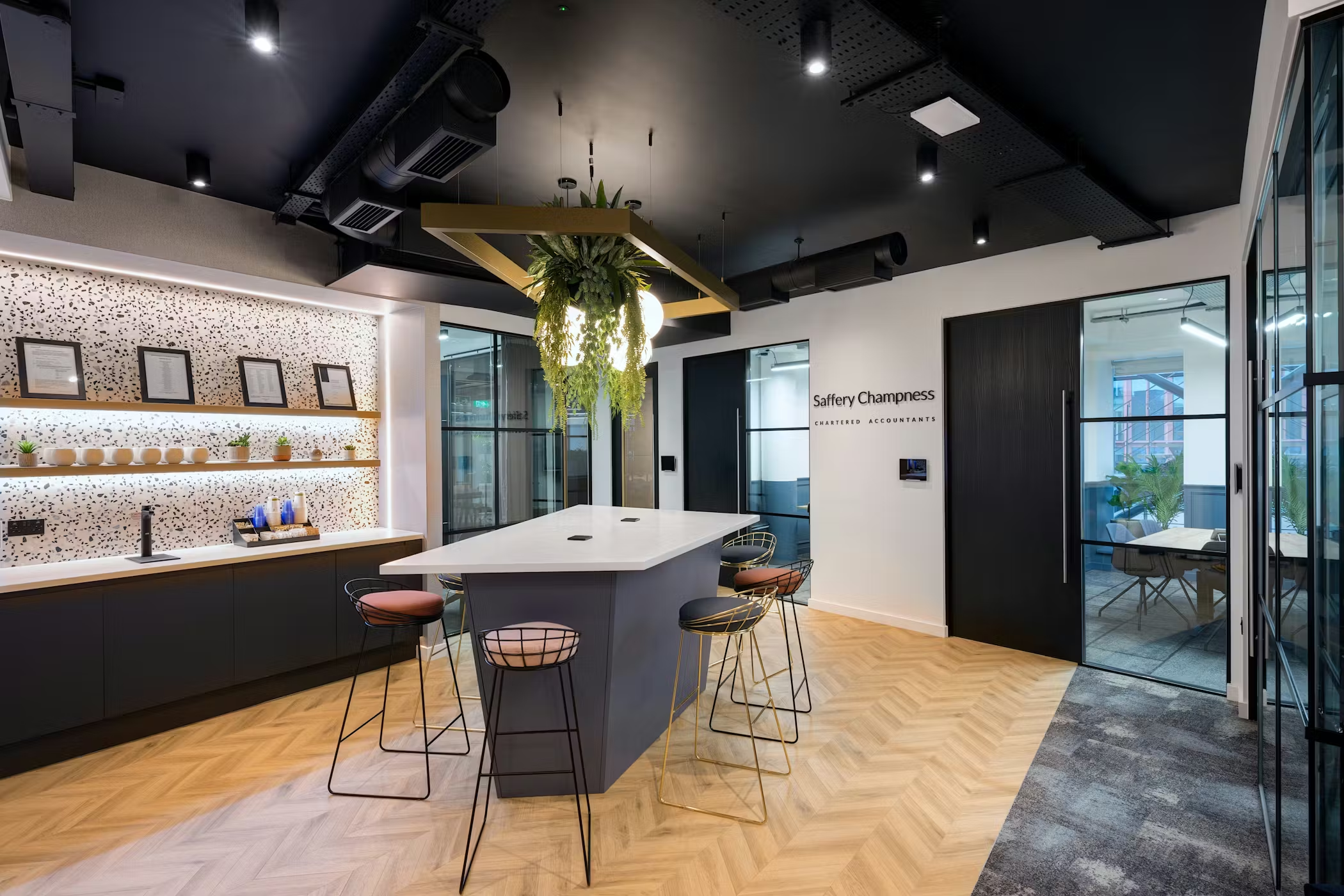
    Here are some key ways you can successfully communicate your ESG strategy through office design.

    Expand
    Michael-Page-Addlestone-01-highres-sRGB-scaled
    Expand
    Czarnikow-06-highres-sRGB-scaled
    Expand
    Saffery-02-cooler-III-highres-sRGB-scaled-3
    Expand
    Houzz-12-highres-sRGB-1
    Expand
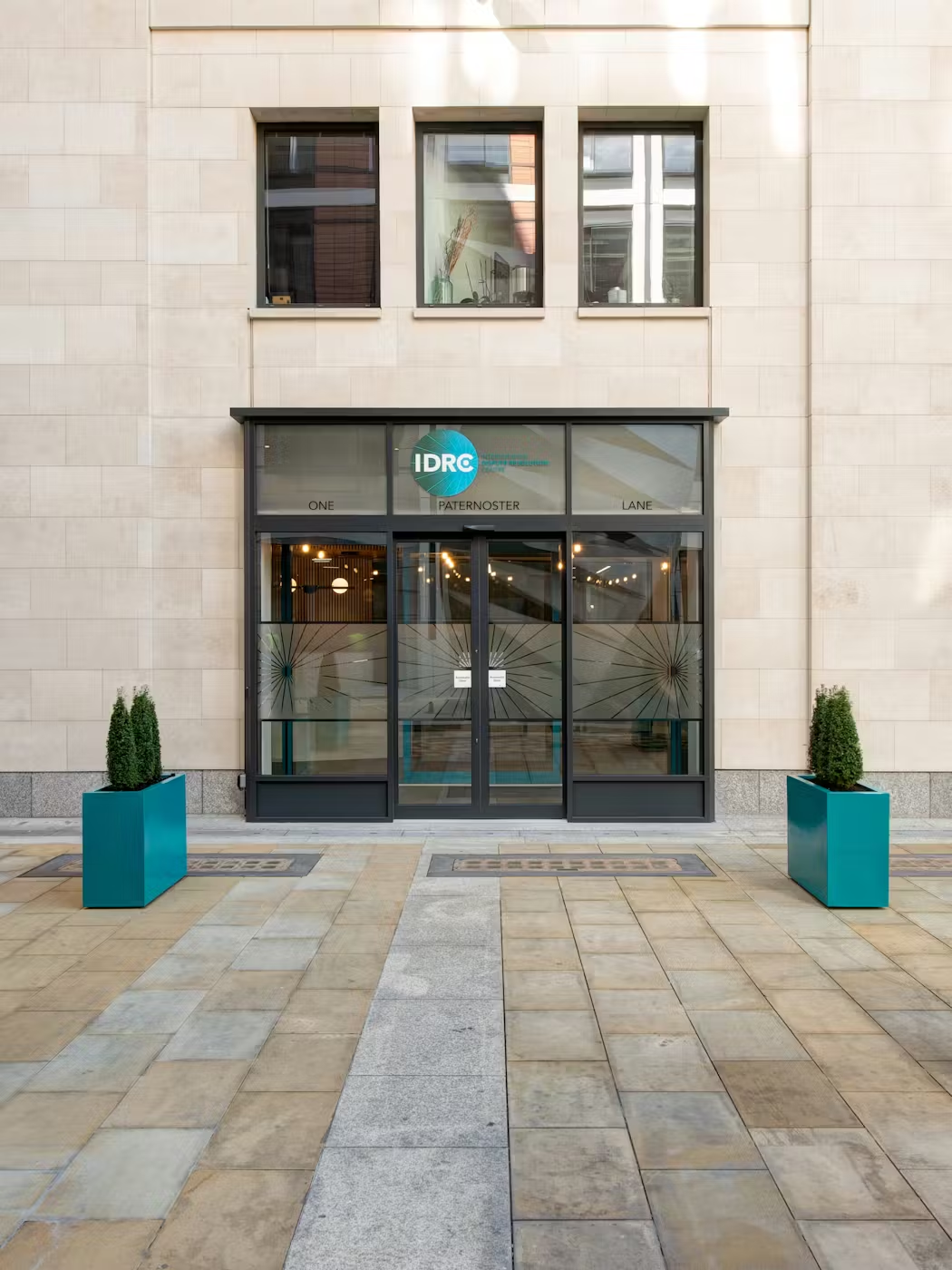
    CEDR-02-highres-sRGB-scaled
    Expand
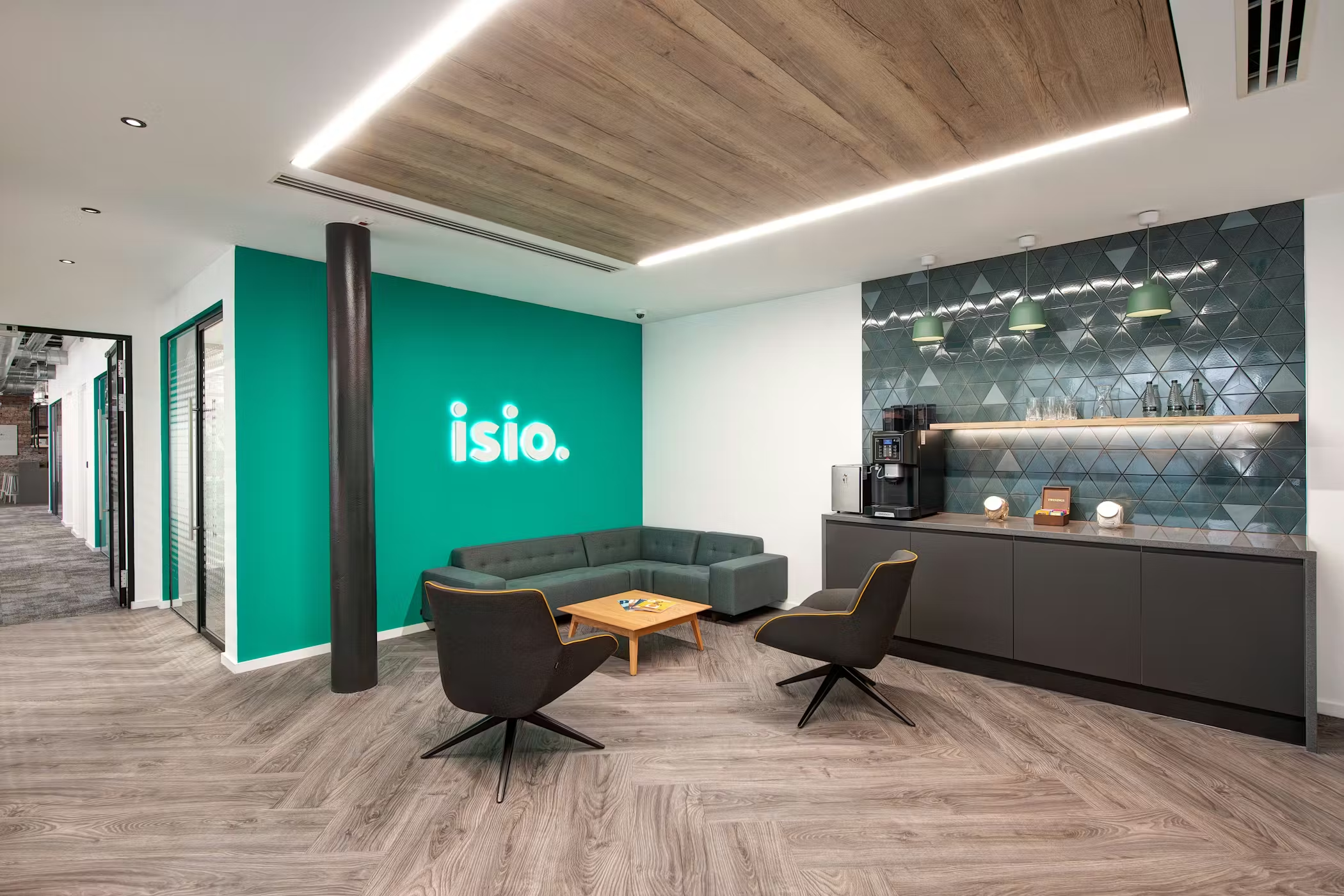
    Isio-Glasgow-03-highres-sRGB-scaled-1
    Expand
    Michael-Page-Addlestone-01-highres-sRGB-scaled
    Expand
    Czarnikow-06-highres-sRGB-scaled
    Expand
    Saffery-02-cooler-III-highres-sRGB-scaled-3
    Expand
    Houzz-12-highres-sRGB-1
    Expand
    CEDR-02-highres-sRGB-scaled
    Expand
    Isio-Glasgow-03-highres-sRGB-scaled-1

    DENTON

    Lightbox Image

    ESG in the office – measuring the impact of ESG goals in office fit-out

    Environmental

    Climate change and environmental impacts have been a huge focus of much of the world in recent years, and this has heavily affected businesses and their workspaces. As recently as 2019, the UK government amended the Climate change act with an even greater target; zero net emissions by the year 2050, which is lower than the previous target of an 80% reduction in emissions by 2050, clearly demonstrating the overwhelming pressure to improve our environmental policies. And with environmental criteria a huge factor in any ESG strategy, it has never been more important.

    A direct consequence of this is the expectation and interest in organisations reducing their own carbon emissions to do their part towards achieving this goal. Only last year, it was announced a third of the UK’s biggest companies had committed to net zero, and this proportion has only grown since. 

    For many organisations, a large volume of their carbon emissions come from their physical office space, which means it is vital to consider upgrading it in order to cut emissions. The energy used to run the lights, IT equipment and heating are just some of the operational carbon emissions you can target. Introducing new technology or natural elements helps reduce your operational carbon, while also reducing stress, increasing productivity, lowering blood pressure and overall improving wellbeing. 

    What must be kept in mind is that any changes you implement to reduce operational emissions, will also increase your embodied carbon – which is the carbon required to produce your service or products. Choosing the right partner for your office fit-out is key to managing these types of emissions and working closely together is the best way to achieve your goals.

    While some will say it is ‘easier’ to relocate or rebuild and start from scratch, here are some examples of ways updating and upgrading your current space can provide the same results.

    • Create a minimalistic design with fewer but more multi-functional materials and products used.

    • Careful selection of materials is vital. Avoid materials such as concrete and steel and consider more sustainable materials such as timber or bamboo. Materials made with a high recycled content are also preferable. An Environmental Product Declaration, or EPD for short, are a great representation of the environmental impact over its lifetime – if available.  

    • Reusing old materials is one of the best ways to reduce the embodied carbon of your office fit-out, as the carbon has already been ‘used’. That’s not to say you can’t reform and remake them into something new! At DENTON, our focus is on ‘reduce, reuse, and recycle’. Materials are returned to manufacturers for recycling back into the production process, creatively repurposed for new design ideas, or appropriate recycling.

    • Waste Reduction – not the sexiest topic, but equally important. Luckily, DENTON is the perfect partner. Sustainability needs accountability, so we’re ISO 14001 certified. This means for every project, we publish a full monthly report of the waste breakdown and suggest appropriate waste management companies that support your environmental policies.

    • We encourage our clients to adopt a SKA or BREEAM rating method for their projects to accurately measure their sustainability impact and benchmark their performance against the rest of the industry. 

    Michael-Page-Addlestone-07-highres-sRGB-scaled

    Social

    An organisation’s social responsibility encompasses its employees, customers, and local community and how well they consider these people in their strategic goals. Following the pandemic, retaining talented staff has been increasingly difficult as employee expectations have risen. As more and more organisations offer hybrid working, workers are no longer content to accept inflexible working hours or a lengthy commute. In fact, research has shown that 51% of UK employees would quit if there were no option for hybrid working.

    Addressing the ‘talent crisis‘ has never been more critical. Creating an office space that encourages staff to collaborate and focus, while still being a comfortable space for clients and customers, is fundamental to retaining staff. Here are 5 areas to focus on when considering social criteria and your office fit-out: 

    • Wellbeing – creating a space that offers choice, comfort and inclusivity will improve your employee’s productivity, engagement and overall wellbeing. It can also dramatically reduce absenteeism as your staff want to be in the space you have created for them. Introducing wellbeing initiatives like healthy meals and snacks, cycle to work schemes, cheaper gym memberships, a relaxing breakout space and even outside meetings can support your social goals and ultimately, retain your employees. 

    • Collaboration – offering spaces which allow employees to come together and share ideas is crucial to the success of any business, however since the pandemic, this has been growing in importance. While working from home may cut your commute, we have all seen the struggles when it comes to collaborating. No longer is everyone in the building together at all times, so it’s important to create a space that entices people in, while encouraging them to collaborate when they are there. Provide seamless AV and power support or install high tables and whiteboards or SMART boards to inspire and stimulate creativity.

    • Productivity – dedicated private and confidential spaces within an office are just as important as breakout areas and rooms for quiet meetings.

    •  The volume of online calls has grown since the pandemic, and many people find it hard to focus with the buzz of the office around them. Meeting pods or quiet zones are ways you can provide spaces for these activities and others. Also, ensure they have the right equipment to meet expectations, i.e. multiple screens, comfortable seating to support posture and noise-cancelling options.

    • Security – your office needs to create a sense of security in your staff, both physically and psychologically. Letting them know where to go if they need support is key to making your employees feel at ease in your building and subsequently want to be there.

    • Flexibility – adapting a space to fit the current needs and allowing your employees some ownership over the space makes them feel like they belong. Multi-functional furniture and sit/stand desks are just some examples of how you create an inclusive and flexible environment.

    Social responsibility also extends to your local community, which includes how your building or space impacts the local community. Being mindful of the community and its needs can help inform decisions and avoid trouble down the line. Something which is certain to put investors off is friction with the public. Equally, local high streets and city centres have suffered during the pandemic and require full community support, including organisations, to bring them back to life.

    At DENTON, in order to improve our social criteria, we support several charitable organisations across a wide range of areas, including sport, education, business, and personal development. We promote active involvement in our community by fully supporting our team in their pursuits of charitable fundraising and contributions to associations and societies. Charitable initiatives are also a great way of bringing an organisation together – while supporting common values.

    EXPAND
    Cundall-03-highres-SRGB-scaled

    DENTON

    Lightbox Image

    Governance


    While a little harder to identify, governance criteria play a key role in an office fit-out during the decision-making stage – specifically, the supply chain and where and how you source your materials. Fair wages, financial transparency, charitable purpose, environmental policies and good working conditions are vital within each of your suppliers. It won’t have avoided your notice that some companies recently have come under fire for using child labour – a big no-no when considering governance criteria. Organisations within your supply chain should be transparent, sustainable, traceable and diverse.

    Your team’s diversity and inclusivity are also vital when representing a clear governance strategy. As well as fostering a welcoming office environment, it reduces staff sickness and increases staff retention further, and promotes collaboration and sharing of ideas from different cultures and backgrounds – an invaluable resource for any organisation. Implementing inclusive policies like an open-door policy can create a collaborative atmosphere and foster relationships with employees of all levels.


    DENTON: crafting environmental, social and well-governed spaces


    So, it’s clear implementing an ESG strategy brings value to developers and organisations and is basically a prerequisite for business growth. As well as buildings being considered more valuable to investors if they are climate-ready and “healthy”, they also help attract and retain employees and help future proof your organisation.


    As discussed, these areas are presented clearly in the design, fit-out and running of your office, and companies that ignore or brush over these criteria will find themselves unable to keep employees engaged and customers buying into your brand. Enter DENTON!


    For over 25 years, we’ve been helping 
    landlords and tenants to create the very best workspaces out there. 


    Our teams, north and south, have an unrivalled blend of technical and creative expertise — and we’re proud to offer 
    a range of services covering every stage of the commercial interior fit-out process, from conception to completion to aftercare. In fact, why not have a gander at some of our recent projects?


    Partner with the workspace design experts today and let us help you implement your ESG strategy. 
    Drop us a message.
     

    Richard Douglas
    Richard Douglas
    Director

    Richard has been Board Director of DENTON since 1998. In addition to his board responsibilities, Richard has executive responsibility for DENTON’s Marketing and Sustainability services.

    Richard is a Chartered Surveyor and holds degrees in Building Surveying, Construction Management and Interior Architecture. He is a highly regarded visiting lecturer at the University of Hertfordshire.

    Have a project in mind?

    Project Image
    • Experience 
    • Creativity 
    • Integrity 
    • Experience 
    • Creativity 
    • Integrity 
    • Experience 
    • Creativity 
    • Integrity 
    • Experience 
    • Creativity 
    • Integrity 
    • Experience 
    • Creativity 
    • Integrity 
    • Experience 
    • Creativity 
    • Integrity 
    • Experience 
    • Creativity 
    • Integrity 
    • Experience 
    • Creativity 
    • Integrity 
    • Experience 
    • Creativity 
    • Integrity 
    • Experience 
    • Creativity 
    • Integrity