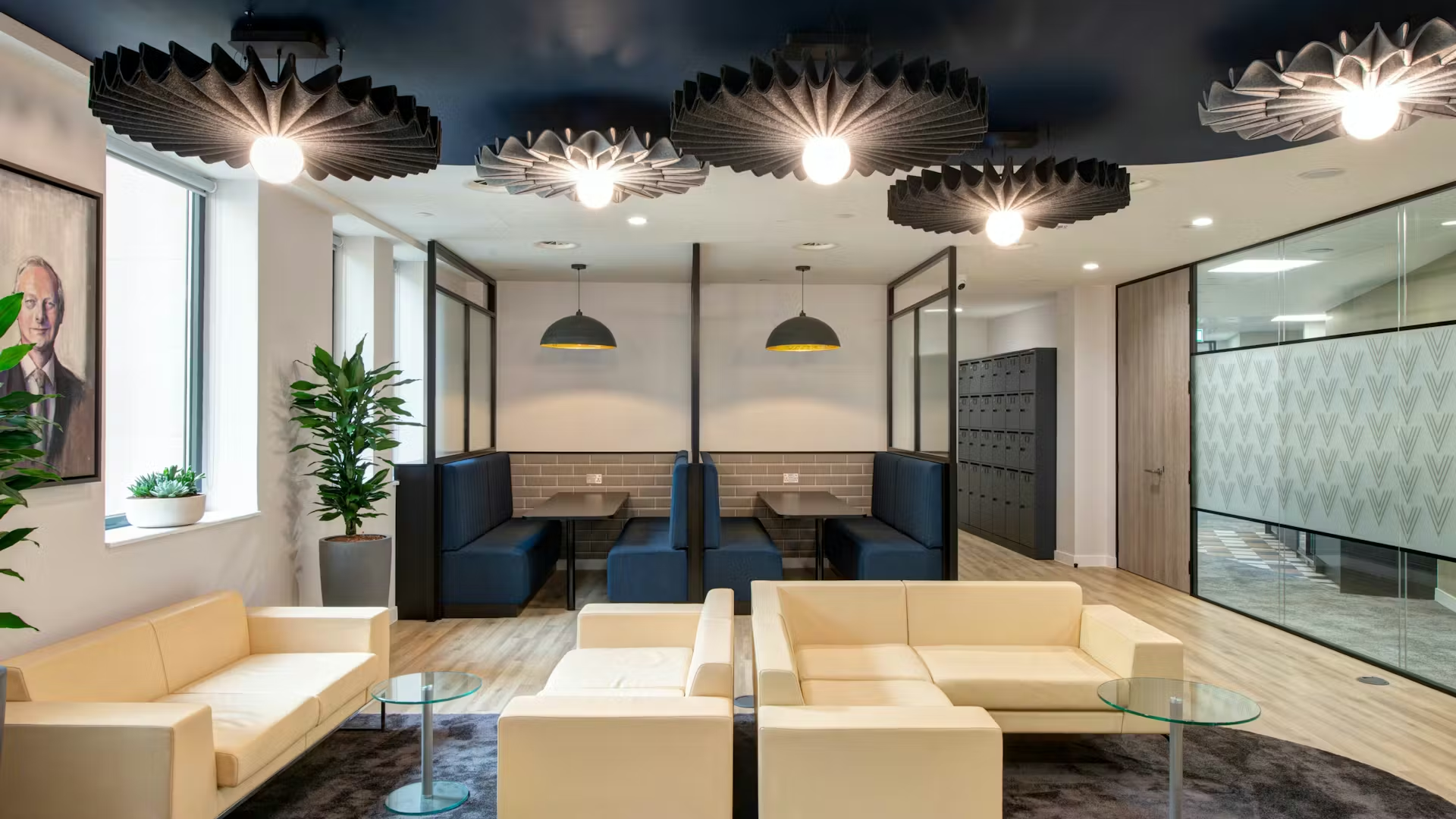
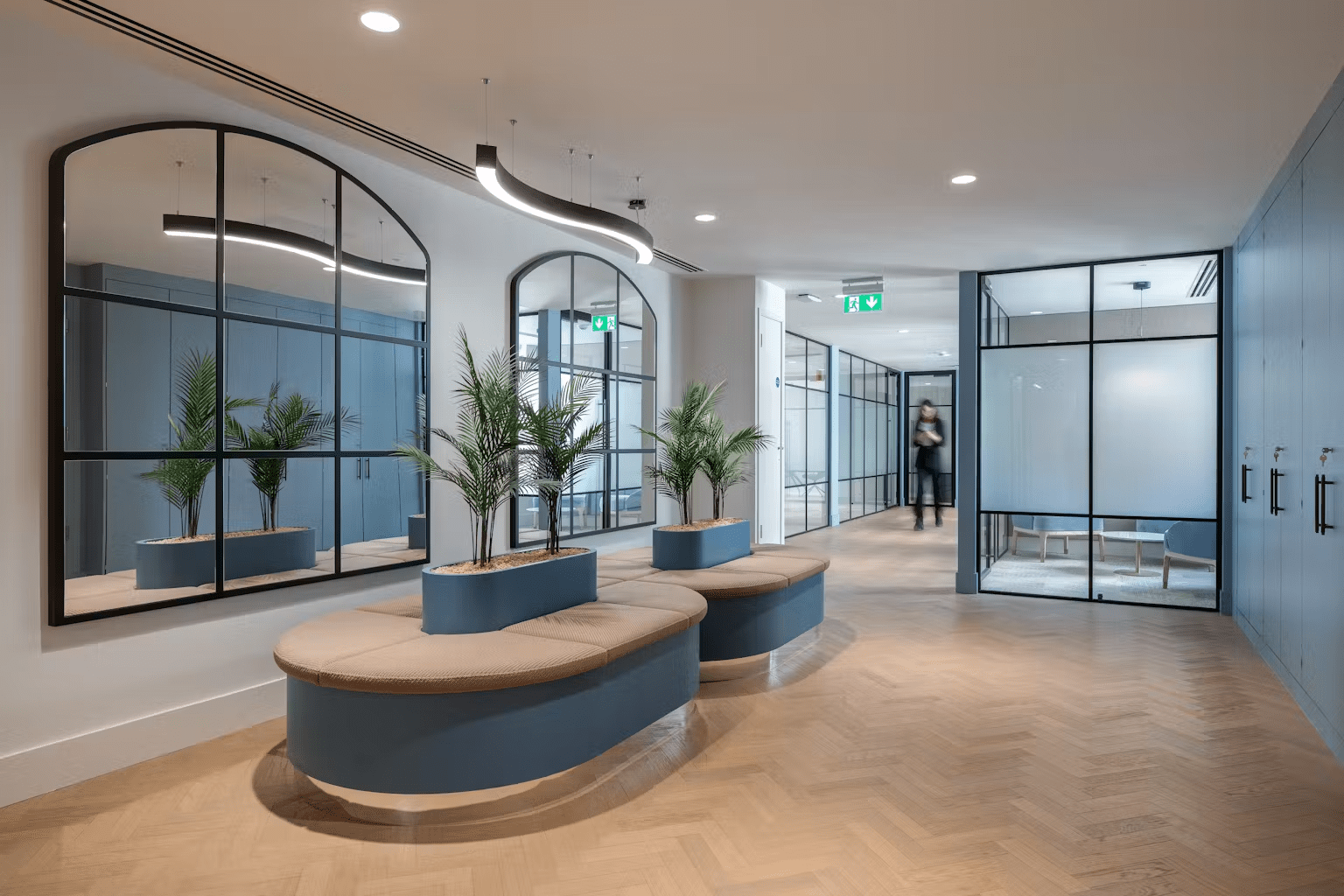
Law firms must navigate the challenge of fostering teamwork and accessibility without compromising client privacy or sensitive information. Striking this balance requires thoughtful planning, integrating architectural solutions, advanced technology, and strategic spatial design.
Legal firms that have successfully implemented these strategies, such as IDRC and Freeths LLP in Leeds demonstrate how careful office fit-outs can enhance both collaboration and confidentiality.
In this article, we explore how legal offices can achieve an optimal blend of openness and confidentiality while maintaining professionalism and security.
The Need for Openness in Modern Legal Offices
As law firms adapt to contemporary work trends, collaborative workspaces have become more desirable. Benefits include:
- Encouraging teamwork and knowledge-sharing – Open-plan office layouts facilitate better communication between teams, enabling seamless collaboration.
- Enhancing employee wellbeing – More natural light, communal spaces, and flexible layouts improve workplace satisfaction and productivity.
- Attracting and retaining talent – Younger legal professionals expect modern, dynamic workplaces that promote collaboration and engagement.
- Improving efficiency – Open-plan work areas can reduce the inefficiencies of siloed office structures and encourage cross-departmental interactions.
However, while openness fosters a more dynamic and engaged workforce, it must be carefully balanced to protect the core principle of any legal practice: confidentiality.
The Importance of Confidentiality in Legal Office Design
Client confidentiality is a legal and ethical obligation for law firms. Poorly designed office spaces can lead to unintentional data exposure, overheard conversations, and security risks. Key considerations include:
- Ensuring soundproofing in meeting areas – Confidential discussions should not be overheard by those outside the room. Considering your office acoustics is vital for preparing for this.
- Providing private spaces for sensitive work – Lawyers need secure environments to handle confidential documents and negotiations.
- Protecting digital security – Open workspaces should not lead to screen visibility issues or unauthorised access to client data.
Finding the middle ground between openness and security is essential to creating modern legal offices that are both efficient and compliant.
Strategies to Balance Collaboration and Confidentiality
1. Zoning the Office Layout
A zoned office approach ensures that different areas are designed with distinct purposes in mind:
- Collaborative Zones – Open-plan areas, breakout spaces, and shared desks encourage teamwork.
- Confidentiality-Focused Zones – Private offices, enclosed meeting rooms, and soundproof booths protect sensitive discussions.
- Hybrid Work Areas – Spaces that offer flexibility, such as glass-walled meeting rooms with privacy films, allow a balance between openness and discretion.
Learn more about planning your office layout.
2. Acoustic Design for Sound Privacy
Soundproofing is critical to maintaining confidentiality in legal offices. Solutions include:
- Acoustic partitions – Reduce noise transfer between workstations.
- White noise systems – Mask conversations to prevent eavesdropping.
- Sound-absorbing materials – Carpets, fabric panels, and ceiling baffles help minimise sound travel.
- Enclosed phone booths – Provide private areas for sensitive calls.
3. Flexible Meeting Room Solutions
Meeting rooms should accommodate both open discussions and private client meetings. Consider:
- Sliding partitions – Convert open conference rooms into enclosed, soundproof spaces when required.
- Smart glass technology – Instantly switch from transparent to opaque for on-demand privacy. Learn more about smart offices
- Booking systems – Ensure secure access to rooms for confidential meetings.
4. Secure Document and Data Handling
In modern legal offices, security extends beyond physical spaces to digital protections. Strategies include:
- Secure document storage – Lockable cabinets and restricted-access filing rooms.
- Paperless office solutions – Reduce risk with cloud-based, encrypted storage.
- Screen privacy filters – Prevent unauthorised viewing of sensitive information.
- Access control systems – Limit entry to confidential areas using keycards or biometric authentication.
5. Designing for Hybrid and Remote Work
Hybrid working is still prevalent in modern offices, requiring legal workspaces to support both on-site and remote collaboration. This includes:
- Confidential remote work policies – Lawyers must have access to secure communication platforms.
- Private virtual meeting rooms – Secure video conferencing tools for client discussions.
- Hot desking with security measures – Ensuring flexible workspaces do not compromise data security. Learn more about designing offices with hot-desking in mind.
6. Client-Focused Privacy Solutions
Law firms must consider client experience when designing office spaces. Enhancements include:
- Dedicated client areas – Separate zones for client meetings prevent exposure to general office discussions.
- Private waiting areas – Avoid placing clients in open reception areas where they might overhear conversations.
- Confidential check-in processes – Use digital sign-ins or discreet reception practices to protect client anonymity.
The Future of Legal Office Design
The legal sector is evolving, and as such office design must keep pace. Key future trends in office design include:
- AI-powered security systems – Enhancing confidentiality with advanced monitoring.
- Sustainable, soundproof materials – Balancing eco-friendly design with acoustic privacy.
- Hybrid workplace technology – Integrating virtual collaboration tools while maintaining data security.
- Modular workspaces – Creating adaptable environments that shift between open and private settings as needed.
Learn more about integrating AI into your workspace.
DENTON, Balancing Openness and Confidentiality for Legal Offices
Creating modern legal offices that strike a balance between openness and confidentiality requires a strategic approach to design. By zoning office spaces, implementing soundproofing solutions, incorporating flexible meeting areas, and ensuring secure document handling, law firms can embrace collaboration while safeguarding client confidentiality.
The future of legal office design lies in adaptability, technology integration, and an unwavering commitment to security—ensuring that law firms remain both efficient and compliant in an evolving professional landscape.
Get in touch with DENTON today to reimagine your Legal office space with our strategic approach to office design.